What Juice Boxes Can Do to Kids’ Teeth
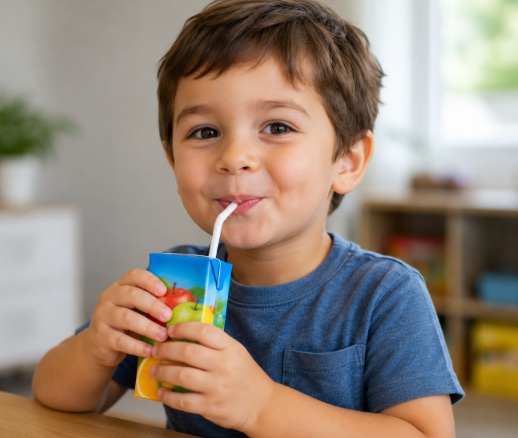
Juice boxes seem harmless.
They are small. They are easy to pack. They feel healthier than pop. Many say “100% juice” or “no sugar added,” so it is easy to assume they are fine for kids’ teeth.
But juice boxes can still affect a child’s smile.
Even unsweetened juice has natural sugar. Many juices are also acidic. When kids sip juice often, their teeth get repeated exposure to sugar and acid. That can raise the risk of cavities, enamel wear, sensitivity, and stains over time.
At Bronte Road Family Dental in Oakville, we often explain it this way. Juice is not the same as whole fruit. For teeth, how often your child drinks juice matters just as much as how much they drink.
Juice Boxes Can Coat Teeth in Sugar
Juice may come from fruit, but it still contains sugar.
That sugar can feed bacteria in the mouth. When bacteria break down sugar, they produce acid. That acid can weaken enamel, which is the hard outer layer of the teeth.
This is how cavities can start.
A juice box may seem small, but the effect depends on how your child drinks it. Finishing it with lunch is different from sipping it slowly all afternoon.
“No Sugar Added” Does Not Mean Sugar-Free
This is a common misunderstanding.
“No sugar added” means sugar was not added during processing. It does not mean the drink has no sugar.
Fruit juice naturally contains sugar. Once fruit is turned into juice, it also loses much of the fibre that helps whole fruit feel filling.
That is why whole fruit is usually a better everyday choice.
Acid Can Weaken Enamel
Many juices are acidic.
Apple juice, orange juice, grape juice, lemonade, fruit punch, and mixed fruit drinks can all expose teeth to acid. Acid can soften enamel for a short time. If this happens often, enamel can slowly wear down.
Kids may not notice enamel wear at first.
Over time, acid exposure can contribute to:
- Tooth sensitivity
- Duller-looking teeth
- Higher cavity risk
- Rough tooth surfaces
- Yellowing as enamel becomes thinner
- Tooth edges that look worn
Water does not create the same acid challenge.
That is one reason water is the best drink between meals.
Frequency Matters More Than Parents Think
The biggest issue is not always one juice box.
It is repeated sipping.
Every time a child drinks juice, their teeth face sugar and acid. Saliva helps repair and rebalance the mouth, but it needs time.
If a child keeps sipping juice over a long period, the teeth do not get that recovery time.
Common Juice Habits That Raise Risk
Juice can become harder on teeth when children:
- Sip it slowly for hours
- Drink it between meals every day
- Take it to bed
- Drink it from a bottle or sippy cup for long periods
- Have juice after brushing at night
- Drink juice instead of water when thirsty
- Have sticky snacks with juice
The mouth needs breaks.
Water gives those breaks. Juice does not.
Juice Boxes at School Can Be Tricky
Juice boxes are popular in school lunches because they are convenient.
The problem is that kids may drink juice and then go back to class without rinsing, drinking water, or brushing. Sugar and acid can sit on the teeth longer.
That does not mean you can never pack juice.
It means you should think about timing and frequency.
Better school lunch habits include:
- Pack water as the main drink
- Save juice for occasional lunches, not every day
- Pair juice with a meal, not as a sipping drink
- Choose whole fruit more often
- Encourage your child to drink water after juice
- Avoid sticky sweet snacks with juice
Small changes can lower the risk without making lunch complicated.
Juice Before Bed Is a Bigger Problem
Juice before bed is especially hard on teeth.
At night, saliva flow drops. Saliva helps rinse away sugar and acid. When there is less saliva, sugar can sit on teeth longer.
That creates a higher-risk situation.
Avoid giving juice after brushing at night. Avoid putting juice in bottles or sippy cups for bedtime.
If your child needs a drink near bedtime, water is the best choice.
Baby Teeth Matter
Some parents think baby teeth do not matter because they fall out.
They do matter.
Baby teeth help children chew, speak, smile, and hold space for adult teeth. Cavities in baby teeth can cause pain, infection, trouble eating, and problems for developing adult teeth.
Protecting baby teeth helps protect future adult teeth too.
Juice Can Affect Breath and Plaque Too
Juice does not only affect cavities.
It can also change how a child’s mouth feels.
Sugar can feed bacteria. Acid can leave the mouth feeling coated. Sticky snacks plus juice can make plaque build faster. If brushing and flossing are not consistent, breath may smell different too.
Parents may notice:
- Morning breath that seems stronger
- A coated feeling on teeth
- Plaque near the gumline
- White spots on teeth
- Sensitivity to cold
- Food getting stuck
- Complaints when brushing
These signs do not always mean a cavity is present, but they are worth watching.
What About Diluting Juice?
Diluting juice with water may reduce the sugar and acid concentration.
But it does not make juice the same as water.
If a child sips diluted juice all day, the teeth are still getting frequent exposure. The habit still matters.
Diluted juice can be a transition step for kids who are used to sweet drinks, but the long-term goal should be simple.
Water should be the main drink between meals.
How to Make Juice Less Harmful for Teeth
You do not need to panic over every juice box.
You just need better habits.
Try this:
- Offer water when your child is thirsty
- Keep juice occasional instead of daily
- Serve juice with meals, not between meals
- Limit juice portions
- Choose whole fruit more often
- Avoid juice at bedtime
- Avoid bottles or sippy cups filled with juice
- Encourage water after juice
- Brush twice a day with fluoride toothpaste
- Help young children brush properly
- Book regular dental checkups
For younger kids, parents should help with brushing. Most children need help until they have the hand control to clean well on their own.
When to Book a Dental Visit
Book a dental visit if you notice changes in your child’s teeth or gums.
Watch for:
- White spots near the gumline
- Brown or dark spots
- Tooth sensitivity
- Pain when eating sweets
- Pain with cold drinks
- Bad breath that keeps coming back
- Bleeding gums
- Food trapping between teeth
- A child avoiding chewing on one side
- Complaints during brushing
- Rough or chipped tooth areas
Small cavities can hide before they hurt. A dental visit can catch problems earlier, when treatment is usually simpler.
How Bronte Road Family Dental Can Help
Bronte Road Family Dental in Oakville can help parents understand how juice, snacks, brushing, and fluoride affect their child’s teeth.
Your dental team can check for:
- Early cavities
- White spot lesions
- Plaque buildup
- Gum irritation
- Enamel wear
- Tooth sensitivity
- Brushing challenges
- Diet habits that may raise cavity risk
- Areas that need fluoride support
Your dentist or hygienist can also suggest practical changes that fit your family’s routine.
The goal is not to make parents feel guilty.
The goal is to help kids keep healthy teeth while still living normal lives.
The Bottom Line
Juice boxes can affect kids’ teeth because they contain sugar and acid.
Even 100% juice can raise cavity risk when children sip it often or drink it between meals. Juice before bed is especially risky because saliva slows down during sleep.
Water is the best everyday drink for teeth.
Whole fruit is usually better than juice.
You do not need to ban juice completely. Keep it occasional. Serve it with meals. Offer water after. Avoid bedtime juice. Help your child brush with fluoride toothpaste twice a day.
Small habits now can protect your child’s smile later.
External Sources
Canadian Dental Association, Nutrition for Children: https://www.cda-adc.ca/en/oral_health/cfyt/dental_care_children/nutrition.asp
Canadian Paediatric Society, Healthy Teeth for Children: https://caringforkids.cps.ca/handouts/healthy-living/healthy_teeth_for_children
Statistics Canada, Direct Measures of Oral Health: https://www150.statcan.gc.ca/n1/daily-quotidien/251201/dq251201a-eng.htm
FAQ
Are juice boxes bad for kids’ teeth?
Juice boxes can affect kids’ teeth when they are consumed often. Juice contains sugar and acid, which can raise the risk of cavities and enamel wear over time.
Is 100% fruit juice safe for teeth?
100% fruit juice is still sugary and acidic. It is better than many sugary drinks, but it should not replace water as the main drink.
How much juice should kids have?
Many pediatric guidelines recommend limiting juice and keeping portions small. Water and whole fruit are better everyday choices.
Is diluted juice better for teeth?
Diluted juice may reduce sugar and acid concentration, but it still exposes teeth to sugar and acid. It is better than full-strength juice, but water is still the best choice between meals.
Should kids brush right after drinking juice?
If the juice is acidic, it is better to rinse with water first and wait before brushing. Brushing right away after acidic drinks can be rough on enamel.
When should my child see a dentist?
Book a visit if your child has tooth pain, sensitivity, white or brown spots, bad breath that keeps coming back, bleeding gums, or trouble chewing.