
Why Jaw Tension Can Show Up as Tooth Pain
Tooth pain does not always start inside the tooth.
Sometimes the tooth is not the main problem.
Jaw tension, clenching, grinding, and tight facial muscles can make teeth feel sore, sensitive, or painful. You may feel pressure in one area. You may wake up with sore teeth. You may think a cavity is starting because chewing feels uncomfortable.
That can feel confusing.
At Bronte Road Family Dental in Oakville, we often explain it this way. Teeth, jaw muscles, joints, and bite pressure all work together. When one part is tense, another part can feel the pain.
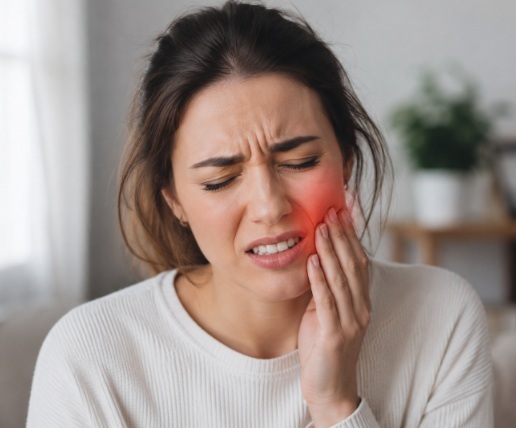
Jaw Tension Can Mimic a Toothache
Jaw tension can create pain that feels like it is coming from a tooth.
This can happen because the jaw muscles sit close to the teeth, joints, ears, temples, and face. When those muscles stay tight, they can refer pain to nearby areas.
You may feel:
- Tooth soreness
- Pressure in several teeth
- Pain when chewing
- Morning tooth sensitivity
- Jaw tightness
- Temple headaches
- Ear-area discomfort
- Facial soreness
- A tired feeling in the jaw
- Pain that moves around
A true tooth problem can also cause these symptoms, so you should not guess.
But if several teeth feel sore, especially in the morning, jaw tension may be part of the picture.
Clenching Can Put Heavy Pressure on Teeth
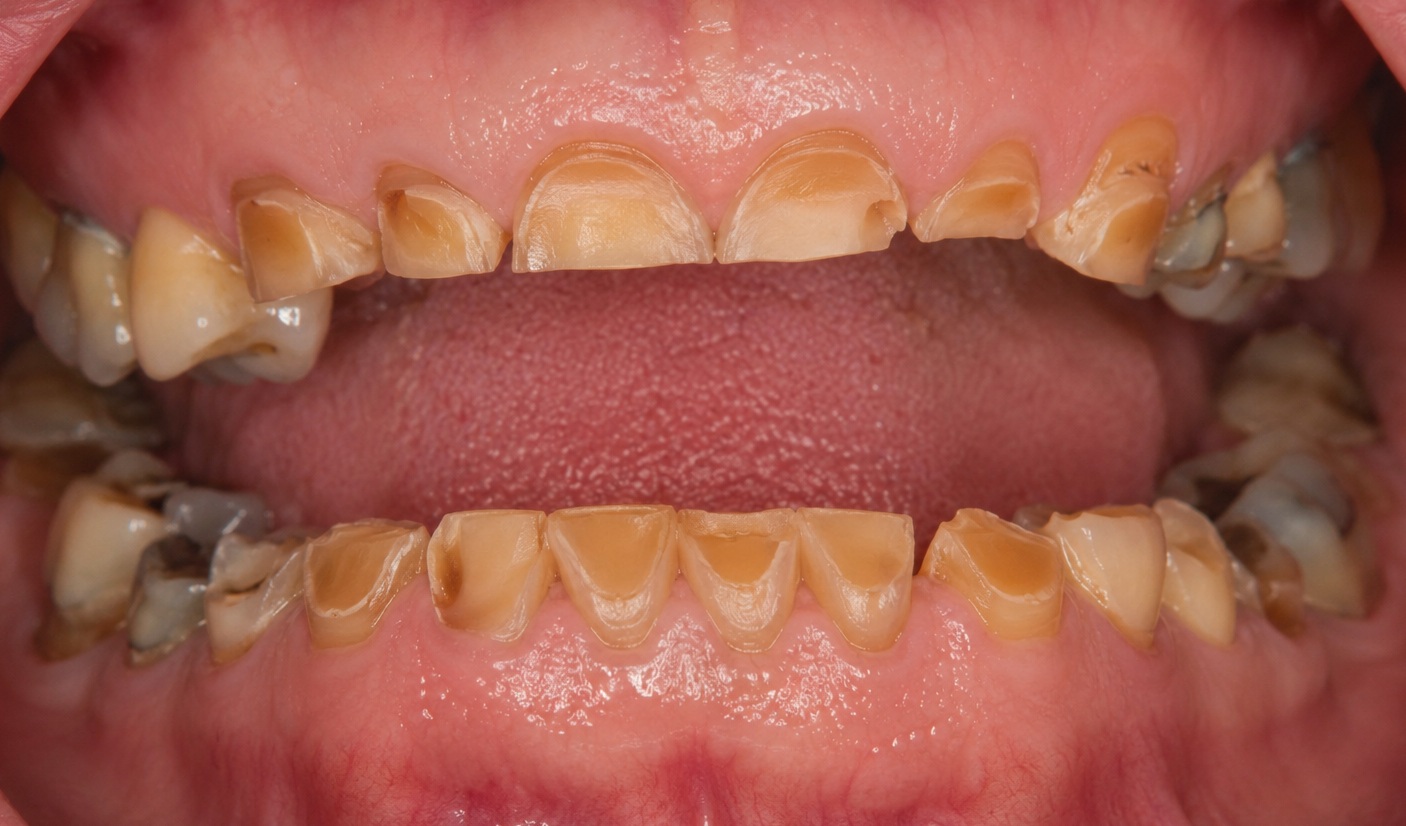
Clenching means you press your teeth together tightly.
You may do it during sleep. You may do it while working, driving, exercising, concentrating, or dealing with stress. Many people clench without realizing it.
Teeth are strong, but they are not meant to be squeezed for long periods.
Clenching can lead to:
- Tooth soreness
- Gumline sensitivity
- Pain when biting
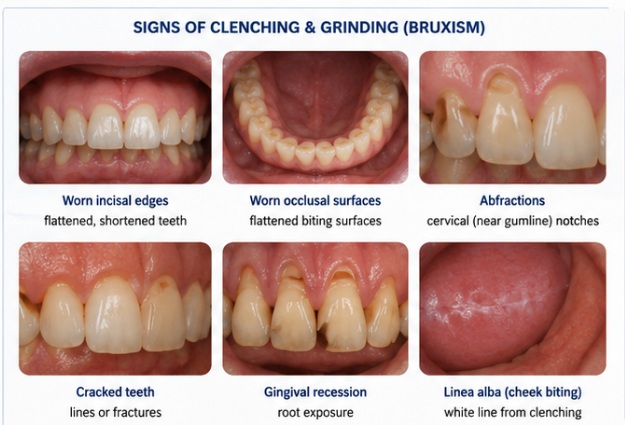
- Cracked teeth
- Chipped edges
- Worn enamel
- Sore jaw muscles
- Headaches
- Tenderness near the temples
The pressure can make a tooth feel painful even when there is no cavity.
Grinding Can Make Teeth Feel Sensitive
Grinding is different from clenching.
Instead of pressing teeth together, the teeth slide or rub against each other. This can happen at night and may be hard to notice until your dentist sees wear.
Grinding can wear down enamel and stress the teeth.
Signs may include:
- Flat tooth edges
- Small chips
- Teeth that look shorter
- Cold sensitivity
- Pain when chewing
- Rough edges
- Cracked fillings
- Jaw soreness in the morning
- A partner hearing grinding sounds at night
If tooth pain keeps appearing without an obvious cavity, grinding may be worth checking.
Morning Tooth Pain Is a Clue
Timing matters.
If your teeth feel sore when you wake up, your jaw may have been active overnight. Nighttime clenching or grinding can make teeth feel bruised or tender by morning.
You may notice:
- Sore back teeth
- Tight jaw muscles
- Headache near the temples
- Jaw clicking
- Difficulty opening wide
- Teeth that feel sensitive at breakfast
- Chewing feels uncomfortable early in the day
Morning pain does not automatically mean grinding.
But it is a clue your dentist will want to know about.
Jaw Tension Can Make One Tooth Feel Worse
Sometimes jaw tension affects many teeth.
Other times, one tooth feels worse because it takes more pressure than the others. This can happen if your bite is uneven, an old filling is high, a tooth is cracked, or one area takes more chewing force.
A high-pressure tooth may feel:
- Tender when biting
- Sore after chewing
- Sensitive to cold
- Sensitive near the gumline
- Different from the teeth beside it
- Fine some days and painful on others
This is why your dentist may check your bite, not just the tooth surface.
A tooth can hurt because of pressure.
TMD Can Feel Like Dental Pain
TMD stands for temporomandibular disorder.
It involves the jaw joint, jaw muscles, or both. The jaw joint sits near the ear and helps you open, close, chew, speak, and yawn.
TMD symptoms can overlap with tooth pain.
You may notice:
- Jaw pain
- Clicking or popping
- Trouble opening wide
- Pain near the ear
- Headaches
- Facial soreness
- Chewing discomfort
- Jaw locking
- Neck or temple discomfort
- Teeth that feel sore without a clear cause
If these symptoms happen with tooth pain, tell your dentist.
The problem may involve the joint, muscles, teeth, or a combination.
Stress Can Show Up in the Jaw
Many people hold stress in their jaw.
They may clench while answering emails, driving, lifting weights, sleeping, or concentrating. They may not notice until the teeth or jaw start to hurt.
Stress-related clenching can become a habit.
Common signs include:
- Teeth touching when you are not eating
- Jaw tightness during the day
- Sore temples
- Neck tension
- Shoulder tension
- Chewing feels tiring
- Headaches after stressful days
- Tooth soreness without clear decay
A simple awareness check can help.
During the day, your teeth should usually be apart when you are not chewing or swallowing. Your lips can be closed, but your teeth do not need to touch.
Tooth Pain Still Needs a Dental Exam
Jaw tension can feel like tooth pain, but you should not assume.
Cavities, cracked teeth, gum recession, worn fillings, infections, and bite problems can also cause pain.
Book a dental visit if you have:
- Pain in one tooth
- Pain when biting
- Cold sensitivity
- Sweet sensitivity
- Swelling
- A bad taste
- A broken filling
- A chipped tooth
- Pain that wakes you up
- Sensitivity that lingers
- Pain that keeps getting worse
Your dentist can check whether the pain is coming from the tooth, the gums, the bite, the jaw muscles, or the jaw joint.
How Dentists Check Jaw-Related Tooth Pain
A dental exam can help separate tooth pain from jaw tension.
Your dentist may check:
- Teeth
- Fillings
- Crowns
- Bite pressure
- Gum health
- Cracks
- Tooth wear
- Jaw muscles
- Jaw joint movement
- Clicking or popping
- X-rays when needed
- Signs of grinding or clenching
They may ask when the pain happens.
That question matters.
Pain that happens mostly in the morning may suggest clenching or grinding. Pain that happens only with cold may suggest sensitivity, decay, cracks, or exposed roots. Pain when biting may suggest a crack, high filling, or bite pressure.
The pattern helps guide the diagnosis.
A Nightguard May Help in Some Cases
If grinding or clenching is part of the problem, your dentist may discuss a nightguard.
A nightguard is a custom appliance worn over the teeth during sleep. It does not stop every jaw habit, but it can help protect teeth from heavy contact and reduce damage from grinding or clenching.
A nightguard may be considered if you have:
- Worn teeth
- Cracked teeth
- Chipped edges
- Sore teeth in the morning
- Jaw soreness
- Repeated broken fillings
- Signs of grinding
- Bite-related tooth pain
A store-bought guard may not fit everyone well. A poorly fitting guard can feel bulky or uncomfortable.
Ask your dentist what option fits your mouth and symptoms.
Daytime Habits Matter Too
Nighttime grinding gets a lot of attention, but daytime clenching is common too.
You may clench while:
- Working at a computer
- Driving
- Exercising
- Feeling stressed
- Concentrating
- Watching TV
- Holding your phone
- Rushing through your day
Try checking in with your jaw a few times a day.
Ask yourself:
- Are my teeth touching?
- Is my jaw tight?
- Are my shoulders raised?
- Is my tongue pressing hard?
- Am I breathing comfortably?
- Can I relax my jaw?
A helpful reminder is: lips together, teeth apart, jaw relaxed.
What You Can Do at Home
Home care can help reduce irritation, but it does not replace a dental exam when pain continues.
Try these simple steps:
- Avoid chewing gum if your jaw feels tired
- Avoid hard or chewy foods during flare-ups
- Do not chew ice
- Do not use teeth as tools
- Notice when your teeth are touching during the day
- Use warm compresses on sore jaw muscles
- Keep caffeine moderate if it worsens clenching
- Stretch and relax your jaw gently
- Manage stress where possible
- Book a dental visit if symptoms keep returning
Do not force your jaw open or do aggressive exercises without guidance.
Gentle is better.
When Jaw Tension Needs More Attention
Book a dental visit if jaw tension or tooth pain lasts more than a few days or keeps returning.
You should also book if you notice:
- Jaw locking
- Trouble opening wide
- Pain when chewing
- Repeated headaches
- Ear-area discomfort
- Teeth that feel sore in the morning
- Cracked or chipped teeth
- Worn tooth edges
- Broken fillings
- Bite changes
- Pain in one tooth
- Swelling or fever
If swelling affects breathing or swallowing, seek urgent medical care.
For most jaw and tooth symptoms, a dental exam is the right starting point.
Why Early Care Matters
Jaw tension can create a cycle.
You clench because your jaw feels tense. The teeth get sore. Then you worry about the soreness. That stress can make the jaw even tighter.
Early care can help break the cycle.
It can also catch tooth damage before it becomes more serious.
Untreated clenching and grinding may contribute to:
- Worn teeth
- Cracks
- Chips
- Gumline sensitivity
- Broken fillings
- Jaw pain
- Headaches
- Tooth pain that comes and goes
The goal is not to blame stress.
The goal is to protect the teeth and reduce pressure.
How Bronte Road Family Dental Can Help
Bronte Road Family Dental in Oakville can help determine whether your tooth pain is coming from the tooth itself, the bite, the jaw muscles, or the jaw joint.
Your dental team can check for:
- Cavities
- Cracks
- Worn fillings
- Bite pressure
- Grinding signs
- Clenching signs
- Tooth wear
- Jaw muscle tenderness
- TMD symptoms
- Gum recession
- Sensitivity triggers
If jaw tension is part of the problem, your dentist can discuss practical next steps.
That may include bite evaluation, a custom nightguard, home-care changes, monitoring, or referral if symptoms need more support.
The goal is to find the cause instead of guessing.
The Bottom Line
Jaw tension can show up as tooth pain.
Clenching, grinding, TMD, stress, and bite pressure can make teeth feel sore, sensitive, or painful even when the tooth looks normal.
But tooth pain should still be checked.
A cavity, crack, infection, worn filling, or gum issue can feel similar.
If your teeth feel sore in the morning, your jaw feels tight, or pain keeps coming back in the same area, book a dental visit.
Finding the cause early can help protect your teeth, your bite, and your comfort.
External Sources
Ontario Dental Association, Teeth Grinding: https://www.oda.ca/oral-health-basics/oral-conditions-diseases/teeth-grinding-bruxism/
Canadian Dental Association, Jaw Clenching and Teeth Grinding: https://www.cda-adc.ca/en/oral_health/talk/complications/bruxism/
Canadian Dental Association, TMD: https://www.cda-adc.ca/en/oral_health/talk/complications/temporomandibular_disorder/
Cleveland Clinic, Bruxism: https://my.clevelandclinic.org/health/diseases/10955-teeth-grinding-bruxism