
Bleeding Gums? It Could Be an Early Sign of Gum Disease
Do your gums bleed when you brush or floss?
Many people assume bleeding gums are normal, but they’re often one of the earliest warning signs of gum disease. The good news is that when gum disease is detected early, it can often be treated successfully before permanent damage occurs.
At Bronte Road Family Dental in Oakville, we help patients recognize the early signs of gum disease and develop personalized treatment plans to protect their teeth, gums, and long-term oral health.
Here’s what you should know.
What Is Gum Disease?
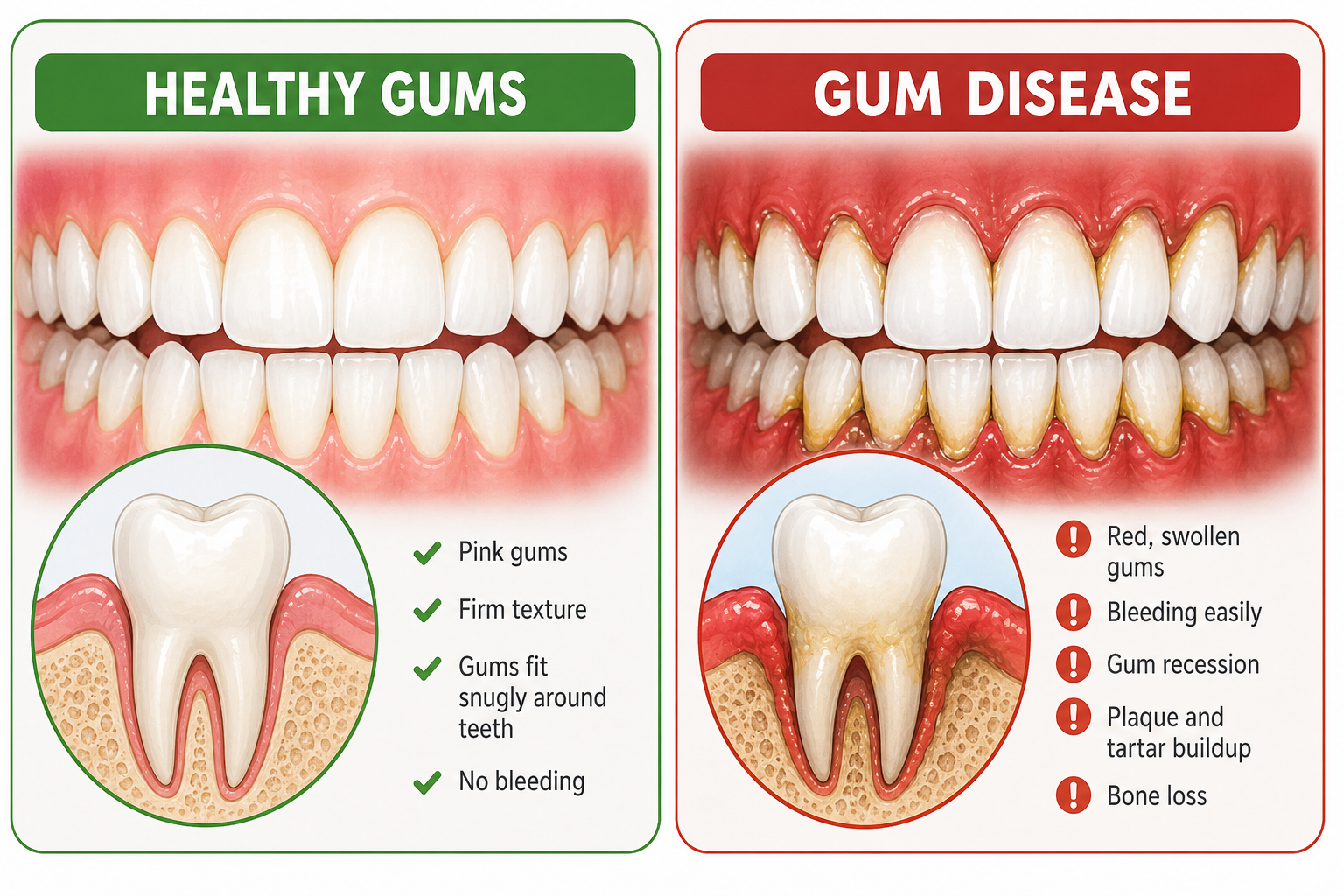
Gum disease, also called periodontal disease, is an infection and inflammation of the tissues that support your teeth.
It usually begins as gingivitis, which affects only the gums.
If left untreated, gingivitis can progress to periodontitis, a more advanced stage that damages the bone supporting your teeth.
Without treatment, severe gum disease may eventually lead to loose teeth and tooth loss.
What Causes Gum Disease?
The primary cause of gum disease is dental plaque.
Plaque is a sticky film of bacteria that naturally forms on your teeth every day.
If plaque isn’t removed through brushing and flossing, it hardens into tartar (calculus). Unlike plaque, tartar cannot be removed at home and must be cleaned professionally.
The bacteria in plaque and tartar irritate the gums, causing inflammation and infection.
Several factors may increase your risk, including:
- Poor oral hygiene
- Smoking or vaping
- Diabetes
- Dry mouth
- Hormonal changes
- Certain medications
- Family history of gum disease
Early Signs of Gum Disease
One reason gum disease is so common is that it often develops without causing significant pain.
Watch for these warning signs:
- Bleeding when brushing or flossing
- Red or swollen gums
- Tender gums
- Persistent bad breath
- Receding gums
- Teeth that appear longer
- Loose teeth
- Pus around the gums
- Changes in your bite
If you notice any of these symptoms, it’s important to schedule a dental examination.
Can Gum Disease Be Reversed?
It depends on the stage.
Gingivitis
The earliest stage of gum disease is usually reversible.
Professional cleaning combined with improved brushing and flossing often allows the gums to heal completely.
Periodontitis
Once gum disease has damaged the supporting bone around the teeth, the lost bone usually cannot be fully restored naturally.
However, modern periodontal treatment can often stop or significantly slow the progression of the disease and help preserve your natural teeth.
How Is Gum Disease Treated?
Treatment depends on how advanced the condition is.
Your dentist may recommend:
- Professional dental cleaning
- Scaling and root planing (deep cleaning)
- Improved home care
- Antibacterial mouth rinses
- More frequent maintenance cleanings
- Referral to a periodontist when advanced treatment is needed
The earlier treatment begins, the simpler it usually is.
Can I Prevent Gum Disease?
Yes.
Most cases of gum disease can be prevented through consistent daily care and regular dental visits.
Healthy habits include:
- Brushing twice daily with fluoride toothpaste
- Flossing every day
- Cleaning between your teeth
- Eating a balanced diet
- Avoiding tobacco products
- Keeping regular dental checkups and professional cleanings
Small daily habits make a significant difference over time.
Does Flossing Really Matter?
Absolutely.
Your toothbrush cleans only the front, back, and chewing surfaces of your teeth.
The spaces between your teeth require floss or another interdental cleaning device.
If your gums bleed when you floss, don’t automatically stop.
Bleeding often indicates inflammation caused by plaque buildup. With consistent, gentle flossing and professional guidance, healthy gums often bleed less over time.
However, persistent bleeding should always be evaluated by a dentist.
When Should You See a Periodontist?
A periodontist is a dentist who specializes in treating diseases affecting the gums and supporting bone.
Your general dentist may recommend a referral if you have:
- Advanced bone loss
- Severe gum recession
- Loose teeth
- Persistent deep periodontal pockets
- Complex gum surgery needs
- Dental implant treatment requiring specialized care
Many patients continue receiving routine dental care from their general dentist while working together with a periodontist when needed.
How Bronte Road Family Dental Can Help
At Bronte Road Family Dental, we believe preventing gum disease is always better than treating advanced problems later.
During your dental examination, we carefully evaluate the health of your gums, measure the supporting tissues around your teeth, and look for early signs of periodontal disease. If treatment is needed, we’ll explain your options clearly and develop a personalized plan to help restore your gum health.
For patients with more advanced periodontal disease, we work closely with trusted specialists when appropriate to ensure you receive the care that’s best for your situation.
Frequently Asked Questions
Is bleeding when brushing normal?
No. Bleeding gums are often an early sign of inflammation caused by plaque and should be evaluated if they continue.
Can gum disease cause tooth loss?
Yes. Advanced gum disease damages the bone and tissues supporting your teeth and is one of the leading causes of tooth loss in adults.
Does gum disease hurt?
Not always. Many people have gum disease without significant pain, which is why regular dental examinations are so important.
Can I treat gum disease at home?
Good brushing and flossing are essential, but once tartar has formed below the gums, professional treatment is usually needed.
Can gum disease come back?
Yes. Patients who have had periodontal disease remain at higher risk and usually benefit from regular maintenance appointments and excellent home care.
Healthy Gums Are the Foundation of a Healthy Smile
Gum disease is one of the most common dental conditions, but it’s also one of the most preventable.
Recognizing the early warning signs, maintaining good oral hygiene, and visiting your dentist regularly can help protect your gums and keep your natural teeth healthy for years to come.
If you’ve noticed bleeding gums, bad breath, gum recession, or other signs of gum disease, the team at Bronte Road Family Dental in Oakville can evaluate your oral health and recommend the treatment that’s right for you.
References
- Canadian Dental Association – Gum Disease
- American Academy of Periodontology – Gum Disease Information
- American Dental Association – MouthHealthy: Gum Disease