What Happens When a Missing Tooth Is Left Alone
A missing tooth can seem easy to ignore.
If it is near the back, you may not see it when you smile. If it does not hurt, you may think it is not urgent. If you can still chew, you may wonder whether replacing it really matters.
But a missing tooth does more than leave a space.
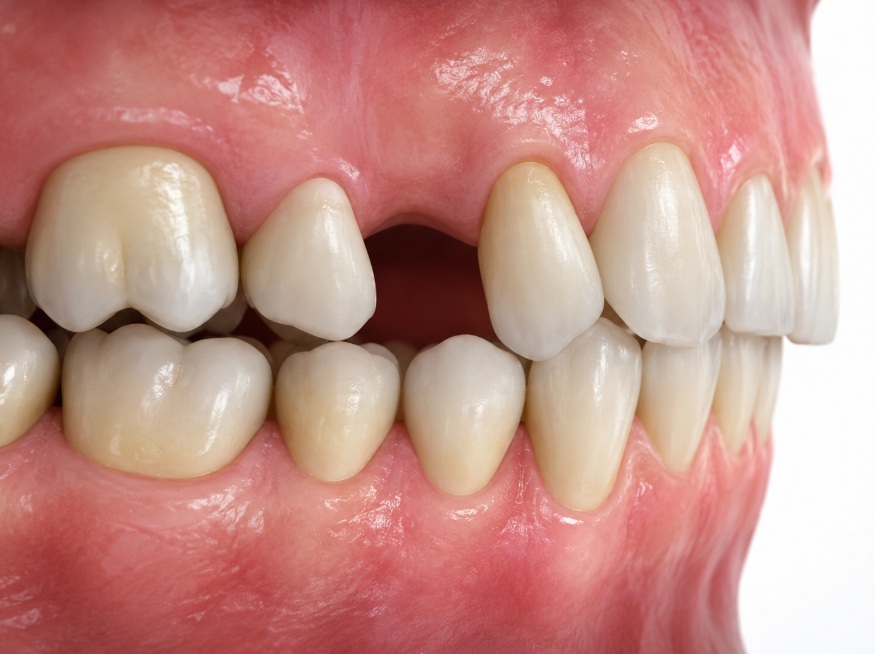
Over time, the teeth beside it can shift. The tooth above or below it can move. Your bite can change. Food may trap more easily. Chewing can become uneven. The jawbone in that area can also change because the tooth root is no longer there.
At Bronte Road Family Dental in Oakville, we often explain it this way. A missing tooth is not just a cosmetic issue. It can affect the way your whole mouth works.
A Missing Tooth Changes the Balance of the Mouth
Teeth work as a team.
Each tooth has a job. Some cut food. Some tear food. Some grind food. Teeth also help support each other and guide your bite.
When one tooth is missing, the balance changes.
You may start chewing more on the other side. Nearby teeth may carry extra pressure. The teeth around the space may slowly move. What starts as one missing tooth can affect other teeth over time.
This is why dentists usually want to discuss replacement options before the space causes bigger changes.
Nearby Teeth Can Shift Into the Space
Teeth are not frozen in place.
When a tooth is removed or lost, the teeth beside the space can gradually tilt or drift. This does not always happen overnight, but it can happen slowly enough that you do not notice it right away.
Shifting teeth can lead to:
- Food trapping
- Floss catching
- Gum irritation
- Bite changes
- Spaces between other teeth
- Crowding
- Harder cleaning
- More pressure on nearby teeth
Once teeth move, replacing the missing tooth can become more complicated.
Sometimes orthodontic treatment may be needed before a replacement can fit properly.
The Opposing Tooth Can Move Too
A missing lower tooth can affect the upper tooth above it.
A missing upper tooth can affect the lower tooth below it.
When a tooth no longer has its partner to bite against, it may slowly move into the open space. Dentists often call this overeruption.
This can create new problems.
The opposing tooth may:
- Look longer
- Change your bite
- Hit another tooth differently
- Create food traps
- Become harder to clean
- Make replacement space smaller
- Need treatment before the missing tooth can be replaced
This is one reason waiting too long can make a simple replacement more difficult.
Chewing Can Become Uneven
Many people adapt after losing a tooth.
They chew on the other side. They avoid certain foods. They cut food smaller. They may not even realize they are doing it.
But uneven chewing can put extra pressure on the remaining teeth.
You may notice:
- Chewing feels less efficient
- Food gets stuck more often
- One side feels more tired
- Teeth on one side wear faster
- Fillings or crowns take more pressure
- Jaw muscles feel sore
- Certain foods feel harder to eat
Back teeth matter because they handle heavy chewing. Losing one can affect daily function even if nobody sees the gap.
Food Traps Can Become a Daily Problem
A missing tooth space can collect food.
So can the tilted teeth beside it.
At first, this may feel like a small annoyance. Over time, food trapping can irritate the gums and make cleaning harder.
Food traps may lead to:
- Bad taste
- Bad breath
- Gum soreness
- Bleeding
- Plaque buildup
- Cavities on nearby teeth
- Tartar
- Difficulty flossing
If you are constantly digging food out of the same space, that area deserves attention.
Do not use sharp objects to clean it. Ask your dentist what is causing the trap and what options may help.
Bone Can Change After Tooth Loss
A natural tooth has a root.
That root sits in the jawbone and helps stimulate the bone during chewing. When a tooth is lost, the root is gone too. Over time, the bone in that area can shrink or change shape.
This matters because bone supports your gums, facial structure, and some tooth replacement options.
Bone changes can affect:
- How the gum looks in the missing tooth area
- Whether an implant is possible
- Whether bone grafting may be needed
- How a bridge or denture fits
- How natural a replacement can look
- How easy the area is to clean
This does not mean every missing tooth needs an implant. It means timing and planning matter.
The longer a tooth is missing, the more your dentist may need to assess the bone and space before recommending a replacement.
A Missing Front Tooth Affects More Than Appearance
A missing front tooth is usually more obvious.
It can affect confidence, speech, biting into food, and how the lips support the smile. People often seek help sooner when the missing tooth shows.
But front teeth still need careful planning.
Your dentist may consider:
- Smile line
- Gum shape
- Tooth colour
- Tooth shape
- Bone support
- Bite
- Speech
- Nearby teeth
- Whether a temporary option is needed
A natural-looking front tooth replacement depends on more than filling the space. It needs to match the smile and function properly.
A Missing Back Tooth Still Matters
Back teeth are easier to ignore because they do not show as much.
But they do heavy work.
Molars and premolars help grind food and support the bite. When one is missing, the pressure does not disappear. It gets redistributed to other teeth.
A missing back tooth may contribute to:
- Uneven chewing
- Tooth movement
- Bite changes
- Extra pressure on remaining molars
- Food trapping
- Wear on the opposite side
- Jaw discomfort in some cases
Even when the gap is hidden, the function matters.
Missing Teeth Can Affect Confidence
Not every effect is physical.
A missing tooth can change how someone feels when smiling, laughing, speaking, or eating with other people.
Some people hide their smile. Some avoid photos. Some avoid certain foods in public. Some worry that others notice the gap.
This matters too.
Dental care is not only about teeth working well. It is also about comfort, confidence, and quality of life.
Replacement Options Depend on the Case
There is no single best replacement for every missing tooth.
Your dentist may discuss several options depending on your mouth, health, budget, timeline, and goals.
Common options include:
- Dental implant
- Dental bridge
- Partial denture
- Complete denture if many teeth are missing
- Temporary replacement while planning
- Monitoring in selected cases
Each option has pros and cons.
A dental implant replaces the tooth root area and supports a crown, bridge, or denture.
A bridge replaces the missing tooth by using nearby teeth or implants for support.
A partial denture is removable and can replace one or more missing teeth.
The right choice depends on the space, bone, gums, bite, nearby teeth, and your overall health.
Dental Implants Are One Option
A dental implant is placed in the jawbone and acts as a replacement tooth root. After healing, it can support a crown, bridge, or denture.
An implant may be considered when:
- Bone support is suitable
- The gums are healthy enough
- The patient’s overall health allows surgery
- The bite can be managed
- The patient wants a fixed option
- Nearby teeth do not need to be prepared for a bridge
Implants are not right for everyone.
Some people need bone grafting first. Some medical conditions, smoking, gum disease, or certain medications may affect planning. Your dentist can explain whether an implant is suitable.
Bridges Are Another Option
A dental bridge replaces one or more missing teeth by spanning the space.
A traditional bridge is usually supported by the teeth on each side of the gap. An implant-supported bridge may be used in other cases.
A bridge may be considered when:
- Nearby teeth already need crowns
- The space is suitable
- Implant treatment is not preferred or not possible
- The patient wants a fixed option
- The bite can support the design
A bridge needs careful cleaning under and around it. The supporting teeth still need protection from decay and gum problems.
Partial Dentures Can Replace One or More Teeth
A partial denture is removable.
It can replace one tooth or several teeth. It may be used as a long-term option or as a temporary option during planning.
A partial denture may be considered when:
- Several teeth are missing
- A removable option is preferred
- Implants or bridges are not suitable
- A temporary replacement is needed
- Budget or timing affects the plan
Partial dentures need regular cleaning and fit checks. If they become loose or uncomfortable, they should be adjusted by a dentist.
Why Timing Matters
You do not always need to replace a missing tooth immediately.
But you should discuss it early.
Early planning helps your dentist check:
- Space
- Bone level
- Gum health
- Bite
- Nearby teeth
- Opposing teeth
- Cosmetic needs
- Chewing function
- Whether a temporary option is needed
Waiting can allow teeth to shift, bone to change, and the bite to adapt in ways that make treatment more complicated later.
A conversation does not mean you must start treatment right away.
It gives you a plan.
When to Ask a Dentist About a Missing Tooth
Book a dental visit if you have a missing tooth and notice:
- Food trapping
- Teeth shifting
- Bite changes
- Chewing on one side
- Gum soreness near the space
- Bad taste
- Bad breath from the area
- A tooth above or below the space moving
- Trouble eating certain foods
- Jaw soreness
- A gap that bothers your smile
- An old denture or bridge that no longer fits well
Even if nothing hurts, it is worth having the space assessed.
Questions to Ask About Replacement
Ask your dentist clear questions.
Helpful questions include:
- What happens if I leave this space alone?
- Are nearby teeth shifting?
- Is the opposing tooth moving?
- Do I have enough bone for an implant?
- Would a bridge affect healthy teeth?
- Is a partial denture reasonable here?
- What option is most conservative?
- What option is most stable?
- How will each option affect cleaning?
- What is the timeline?
- What happens if I wait 6 months or 1 year?
- Will I need a temporary tooth?
These questions help you compare options without rushing.
How Bronte Road Family Dental Can Help
Bronte Road Family Dental in Oakville can assess a missing tooth space and explain your options clearly.
Your dental team can check:
- The missing tooth area
- Bone and gum support
- Space changes
- Bite changes
- Nearby teeth
- Opposing teeth
- Chewing function
- Food traps
- X-rays when needed
- Whether an implant, bridge, denture, or monitoring makes sense
If you are considering tooth replacement or dental implants in Oakville, your dentist can help you understand what fits your mouth and your goals.
The best plan is not always the fastest or most expensive option.
It is the option that protects your oral health and works for your life.
The Bottom Line
A missing tooth should not be ignored just because it does not hurt.
Leaving a gap alone can allow nearby teeth to shift, the opposing tooth to move, chewing to change, food to trap, and bone in the area to change over time.
Some missing teeth need replacement sooner. Some can be monitored for a period. But every missing tooth deserves a plan.
Ask your dentist what may happen if you wait and which replacement options make sense.
A missing tooth is easier to manage before it creates new problems.
External Sources
Ontario Dental Association, Tooth Loss: https://www.oda.ca/oral-health-basics/oral-conditions-diseases/tooth-loss/
Canadian Dental Association, Dental Implants: https://www.cda-adc.ca/en/oral_health/procedures/dental_implants/
Canadian Dental Association, Bridges: https://www.cda-adc.ca/en/oral_health/procedures/bridges_dentures/bridges.asp
Mayo Clinic, Dental Implant Surgery: https://www.mayoclinic.org/tests-procedures/dental-implant-surgery/about/pac-20384622