
In-Office Teeth Whitening vs Take-Home Whitening Trays
A brighter smile can make your teeth look cleaner, fresher, and more confident.
But not every whitening option works the same way.
Some patients want fast results before a wedding, interview, vacation, or big event. Others prefer a slower approach they can do at home. Some want a stronger whitening start in the dental office, then trays to maintain the result later.
That is where in-office whitening and take-home whitening trays come in.
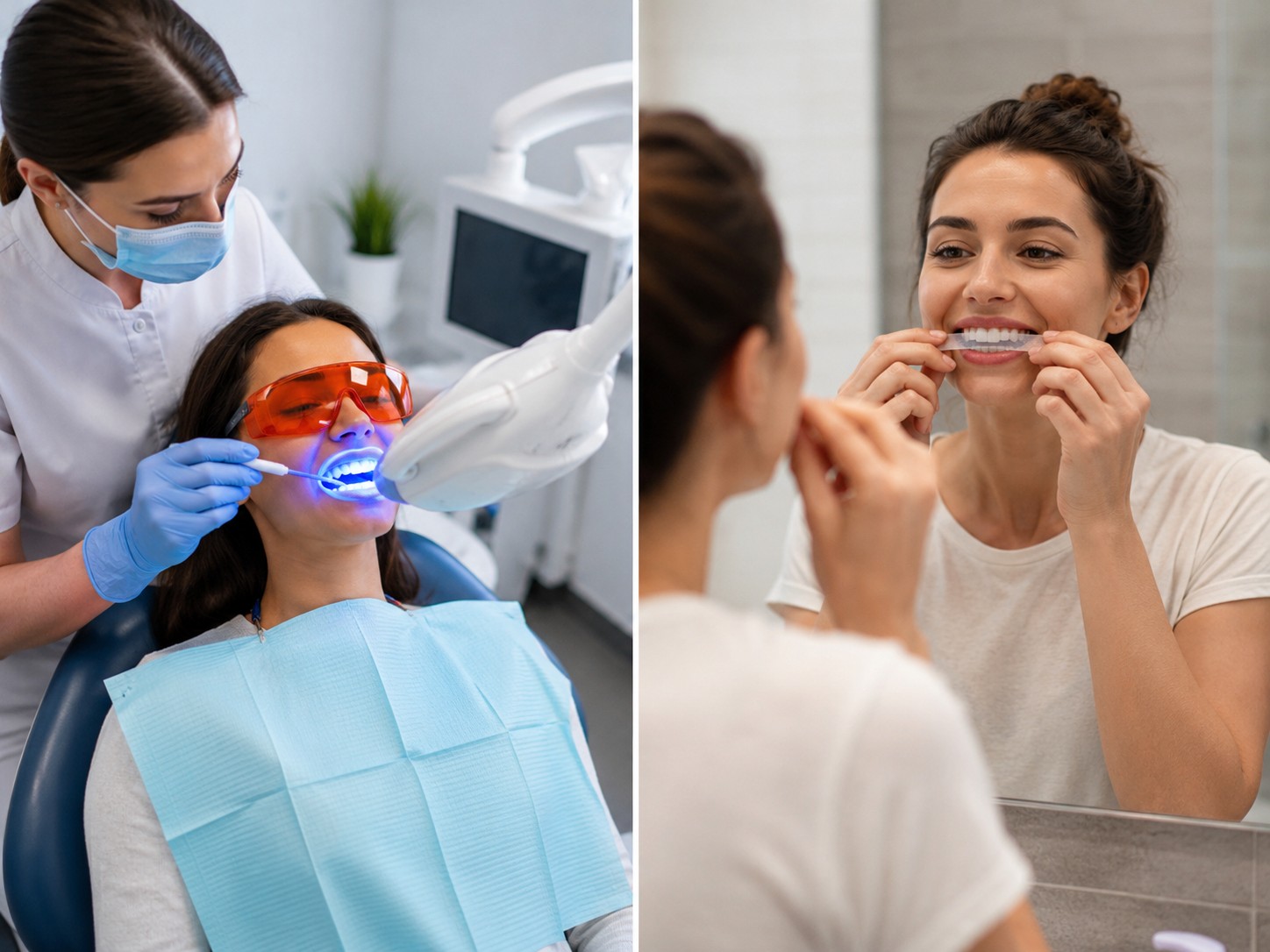
At Bronte Road Family Dental in Oakville, we often explain it this way. In-office whitening is usually about speed and professional control. Take-home trays are usually about gradual whitening, flexibility, and maintenance.
What Teeth Whitening Actually Does for Tooth Discoloration
Teeth whitening lightens the colour of natural teeth.
It works by using whitening gel, and many tooth whitening products rely on a peroxide-based bleaching agent such as hydrogen peroxide to break down stains on the tooth’s surface and deeper within the tooth structure. This can help with tooth discoloration caused by extrinsic stains from food, drinks, and smoking, as well as intrinsic stains linked to aging or tooth development. Enamel erosion can also expose yellow dentin underneath, making discolored teeth look darker.
Whitening can improve tooth colour, but it does not change:
- Tooth shape
- Tooth position
- Old fillings
- Crowns
- Veneers
- Bonding
- Tartar buildup
- Gum health
- Chips or cracks
This matters because sometimes a smile looks dull because of tooth discolouration. Other times, the issue is old bonding, uneven tooth shape, plaque, tartar, or dental work that no longer matches.
A dental exam can help you understand what whitening can and cannot do for your smile.
What In-Office Teeth Whitening Is: The Role of Hydrogen Peroxide
In-office whitening is done at the dentist’s office.
The dental team protects your gums and soft tissues, applies professional whitening gel to the teeth, and monitors the whitening process. Depending on the whitening system, the appointment may include one or more gel applications. This whitening treatment often uses highly concentrated hydrogen peroxide or 10% to 44% carbamide peroxide under supervision. In-office bleaching can lighten teeth by about 2 to 7 shades, depending on the case.
In-office whitening may be a good fit if you want:
- Faster results
- Professional supervision
- Whitening before a major event
- A more controlled appointment
- Help managing sensitivity
- A clear starting shade and final shade comparison
- Guidance before cosmetic treatment
Many patients like in-office whitening because it is completed in one visit or a short series of visits, depending on the case, and some light-activated or laser options take about 1 to 2 hours at the dental office. Teeth whitening safe when provided by a dental professional, and stronger peroxide treatments over 6% hydrogen peroxide should only be supplied by qualified providers.
What Take-Home Whitening Trays Are
Take-home whitening trays are custom trays made to fit your teeth and can be provided by your dentist as at-home kits to whiten your teeth.
Your dentist takes a scan or impression of your teeth. Then custom trays are made so the whitening gel can sit evenly against your teeth; this close fit helps minimize gum irritation and reduce the risk of chemical burns by limiting gel spread onto soft tissues. You place the gel in the trays and wear them at home according to the manufacturer’s instructions, with guidance from an oral health professional.
Take-home trays may be a good fit if you want:
- Gradual whitening
- More control over timing
- A custom fit
- The ability to pause if teeth feel sensitive
- A way to maintain whitening later
- A less rushed process
- Whitening that fits your schedule
The trays are usually reusable, as long as they still fit well. Your dentist can advise how to use them safely and how often touch-ups may be appropriate. Some home kits can start showing results in as little as three days, though timing varies.
The Biggest Difference Is Speed
The biggest difference between in-office whitening and take-home trays is timing.
In-office whitening usually works faster because it uses professional supervision and a controlled office setting.
Take-home trays usually work more gradually. Results build over several days or weeks, depending on the whitening gel, wear time, and your starting tooth shade. By comparison, OTC home kits such as strips usually lighten teeth by about 1 to 2 shades and are often less effective than professional options if you want whiter teeth faster.
So the question is simple.
Do you want a faster result, or do you prefer gradual control?
Neither option is automatically better for everyone. The right choice depends on your teeth, your sensitivity level, your timeline, your existing dental work, and your goals.
In-Office Whitening Gives More Immediate Change
In-office whitening is often chosen by patients who want to see a visible change quickly. Many in-office treatments can be completed in about 1 hour at the dental office for a whiter smile.
This can be helpful before:
- Weddings
- Graduations
- Job interviews
- Vacations
- Family photos
- Special events
- Cosmetic dental treatment planning
Because the whitening is done in the office, your dental team can protect the gums, monitor the teeth, and check how your teeth respond. In-office care may lighten teeth by roughly 2 to 7 shades, depending on the starting shade and stain type, which can lead to brighter teeth.
However, faster whitening can sometimes come with temporary sensitivity. That is why it is important to tell your dentist if you already have sensitive teeth, gum recession, exposed roots, cracks, cavities, or old dental work.
Take-Home Trays Give More Flexibility
Take-home trays are convenient because you use them at home.
You can whiten gradually and adjust the schedule based on your dentist’s instructions. If your teeth feel sensitive, your dentist may advise spacing out use, reducing wear time, or using desensitizing products.
Take-home trays can also be useful for maintenance after in-office whitening.
For example, some patients choose:
- In-office whitening for the initial result
- Take-home trays for touch-ups later
This combination can work well for patients who want a brighter starting point and a practical way to maintain it over time.
Custom Trays Fit Better Than Generic Trays
Fit matters.
Custom trays are made for your teeth, so they usually hold the gel more evenly and comfortably than generic trays. A better fit can help keep whitening gel where it belongs and reduce the chance of excess gel reaching soft tissue, since whitening agents can cause gum irritation when they contact the gums.
A good tray should:
- Fit snugly
- Feel comfortable
- Hold gel against the teeth
- Avoid rubbing the gums
- Be easy to insert and remove
- Stay stable during wear
If whitening gel leaks out or the tray feels loose, bulky, or painful, tell your dental team.
Do not keep using a tray that does not fit properly. Always follow teeth whitening instructions.
Whitening Does Not Work on Crowns, Veneers, or Fillings
This is one of the most important things to know before whitening.
Whitening lightens natural teeth. Its whitening effects do not change the color of restorations such as crowns or fillings, and tooth bleaching does not affect veneers or bonding the same way.
That means visible dental work may not match after whitening.
This can matter if you have:
- Front tooth fillings
- Dental bonding
- Porcelain veneers
- Crowns
- Bridges
- Implant crowns
- Old restorations that already look darker or lighter
If you plan to replace bonding, crowns, or veneers, whitening is often discussed first. That way, the new dental work can be matched to your brighter tooth shade. Not all discolored teeth respond the same way to whitening, especially when the colour difference is caused by restorations rather than natural tooth stain.
A Cleaning May Be Recommended First
Some patients should have a dental cleaning before whitening.
A cleaning removes plaque, tartar, and surface stains that may make teeth look dull. It also helps your dentist and hygienist assess your gums, enamel, sensitivity, cavities, and existing dental work.
Cleaning and whitening are not the same thing.
Cleaning removes buildup and surface stain.
Whitening lightens the colour of natural teeth.
If tartar or plaque is sitting on the teeth, whitening may not give the best result. A healthier, cleaner starting point is usually better.
Sensitivity Can Happen With Either Option
Temporary tooth sensitivity is a common side effect of whitening treatments.
Some people feel no sensitivity. Others feel zingers, cold sensitivity, or mild discomfort during or after treatment.
Clinical studies have reported sensitivity after in-office whitening in roughly 67–78% of patients.
Sensitivity may be more likely if you have:
- Gum recession
- Exposed root surfaces
- Thin enamel
- Tooth cracks
- Cavities
- Worn teeth
- Recent dental work
- A history of sensitive teeth
- Grinding or clenching
Tell your dentist before whitening if your teeth are already sensitive.
Your dental team may suggest a desensitizing toothpaste, fluoride support, shorter wear times, spacing out whitening sessions, or treating dental problems before whitening. Higher hydrogen peroxide levels above 10% can irritate or damage tissues if used improperly, which is one reason professional supervision matters.
Who Should Be Careful With Whitening?
Whitening is not right for every patient at every time.
You should speak with a dentist or another oral health professional before starting if you have:
- Untreated cavities
- Gum disease
- Very sensitive teeth
- Gum recession
- Exposed roots
- Cracked teeth
- Leaking fillings
- Visible crowns or veneers
- Old bonding on front teeth
- Pregnancy or breastfeeding concerns
- A history of whitening sensitivity
Whitening over unhealthy teeth or gums can make problems feel worse.
A dental exam helps make sure whitening is appropriate before you start.
Which Option Looks More Natural?
Both in-office whitening and take-home trays can look natural when planned well.
A natural result depends on:
- Your starting tooth shade
- Your enamel
- Your age
- Existing dental work
- Stain type
- Whitening strength
- Treatment time
- How bright you want to go
Very white teeth are not always the most natural-looking teeth.
A good whitening plan should brighten your smile while still fitting your face, age, tooth shape, and dental work.
The goal is not to make your teeth look artificial.
The goal is to make your smile look cleaner and fresher.
How Long Do Whitening Results Last?
Whitening results do not last forever, and how long they last varies: professional whitening treatments typically last 6 to 12 months, while with good habits some effects can last up to three years.
Your teeth can stain again over time, especially if you often drink coffee, tea, red wine, cola, or other dark or acidic drinks. Coffee, tea, and red wine can stain teeth over time. Smoking and vaping can also affect tooth colour.
You can help maintain whitening by:
- Brushing twice a day
- Flossing daily
- Keeping regular dental cleanings
- Drinking water after coffee, tea, or wine
- Limiting certain foods and drinks that stain teeth, including tomato based sauces
- Using a straw when helpful
- Avoiding smoking or vaping
- Using take-home trays for touch-ups if recommended
Maintenance is part of whitening.
That is one reason take-home trays can be useful even if you start with in-office whitening.
In-Office Whitening or Trays: Which Should You Choose?
Choose in-office whitening if you want faster results and prefer the process to be done in the dental office.
Choose take-home trays if you want gradual whitening, more flexibility, and the ability to do touch-ups over time.
Choose both if you want a stronger start and a maintenance option.
Ask your dentist:
- Are my teeth healthy enough for whitening?
- Do I need a cleaning first?
- Will my fillings, crowns, veneers, or bonding match after whitening?
- Am I likely to have sensitivity?
- Which option fits my timeline?
- Which tooth whitening methods or whitening products fit my sensitivity level and timeline?
- How white can my teeth realistically get?
- How do I maintain the result?
- Should I whiten before bonding or veneers?
These questions help you choose the option that fits your mouth, not just the option that sounds fastest.
How a Dental Professional at Bronte Road Family Dental Can Help
Bronte Road Family Dental in Oakville can help you compare in-office whitening and take-home whitening trays.
Your dental team can check:
- Tooth shade
- Surface stains
- Plaque and tartar buildup
- Gum health
- Tooth sensitivity
- Existing fillings, crowns, veneers, or bonding
- Whether a cleaning should happen first
- Whether teeth whitening safe options are appropriate for your teeth and dental work
- Which option fits your goals and timeline
If whitening is a good option, your dentist can explain how the treatment works, what results to expect, how to manage sensitivity, and review different whitening products if in-office care or trays are being considered.
The best whitening plan is not the same for everyone.
It should be matched to your teeth, your comfort, and your goals.
The Bottom Line
In-office whitening and take-home whitening trays can both brighten natural teeth.
In-office whitening is usually faster and done under professional supervision.
Take-home trays are more gradual, flexible, and useful for maintenance.
Whitening does not change the colour of crowns, veneers, fillings, or bonding. Sensitivity can happen, and some patients need a cleaning or dental treatment before whitening starts.
If you are thinking about teeth whitening in Oakville, start with a dental exam and a clear conversation.
A brighter smile should still be healthy, comfortable, and natural-looking.
External Sources:
Canadian Dental Association, Teeth Whitening: https://www.cda-adc.ca/en/oral_health/procedures/teeth_whitening/index.asp
Canadian Dental Association, Position on Teeth Bleaching: https://www.cda-adc.ca/en/about/position_statements/toothbleaching/
American Dental Association, Whitening: https://www.ada.org/resources/ada-library/oral-health-topics/whitening
Health Canada, Safe Use of Home Tooth Whitening Kits: https://www.canada.ca/en/health-canada/services/healthy-living/your-health/lifestyles/safe-use-home-tooth-whitening-kits.html
FAQ
Is in-office teeth whitening better than take-home trays?
Not always. In-office whitening is usually faster, while take-home trays are more gradual and flexible. The better option depends on your teeth, sensitivity, timeline, and goals.
How do take-home whitening trays work?
Custom trays are made to fit your teeth. You place whitening gel in the trays and wear them at home according to the manufacturer’s instructions and your dentist’s advice.
Does teeth whitening hurt?
Whitening can cause temporary sensitivity for some patients. Tell your dentist if you already have sensitive teeth so they can help you plan safely.
Will whitening work on crowns or fillings?
No. Whitening lightens natural teeth, but it does not change the colour of crowns, veneers, bonding, or tooth-coloured fillings the same way.
Should I get a cleaning before whitening?
Many patients benefit from a cleaning before whitening because plaque, tartar, and surface stains can affect how the teeth look before treatment.
Can I do in-office whitening and trays together?
Yes. Some patients use in-office whitening for a faster initial result and take-home trays later for maintenance or touch-ups, if recommended by their dentist. Others also use whitening rinses at home, though those products may take up to three months to show results.