
Why Six-Month Cleanings Are Not Just a Calendar Habit
Six-month dental cleanings can feel like a routine appointment.
You get the reminder. You book the visit. You sit in the chair. Your teeth feel smooth afterward. Then you move on with your day.
It can seem like just another calendar habit.
But regular cleanings are not only about checking a box. They help remove buildup your toothbrush cannot remove. They help catch gum problems early. They help spot small cavities before they hurt. They also give your dental team a chance to notice changes before they become bigger issues.
At Bronte Road Family Dental in Oakville, we often explain it this way. A six-month cleaning is not only about cleaning what is there today. It is about preventing what could become a bigger problem later.
Why Six Months Became a Common Schedule
Many people hear “every six months” and think it is a fixed rule for everyone.
It is not that simple.
The Canadian Dental Association says how often you need dental exams depends on your oral health needs. For many people, that means every six months. Some people need visits more often. Some may need them less often.
Your schedule depends on things like:
- How quickly tartar builds up
- Your gum health
- Your cavity risk
- Your brushing and flossing habits
- Dry mouth
- Smoking or vaping
- Dental work such as crowns, bridges, implants, or retainers
- Medical conditions or medications that affect your mouth
- Past gum disease or frequent cavities
So six months is not just a random date. It is a common prevention window that helps many people stay ahead of buildup and small problems.
Your Toothbrush Cannot Remove Tartar
Your toothbrush is important.
It removes soft plaque and food particles. It helps keep your mouth clean between dental visits.
But once plaque hardens into tartar, your toothbrush cannot remove it. Floss cannot remove it either.
Tartar often builds up:
- Behind the lower front teeth
- Along the gumline
- Between teeth
- Around crowded teeth
- Near crowns, fillings, or bridges
- In areas that are hard to reach
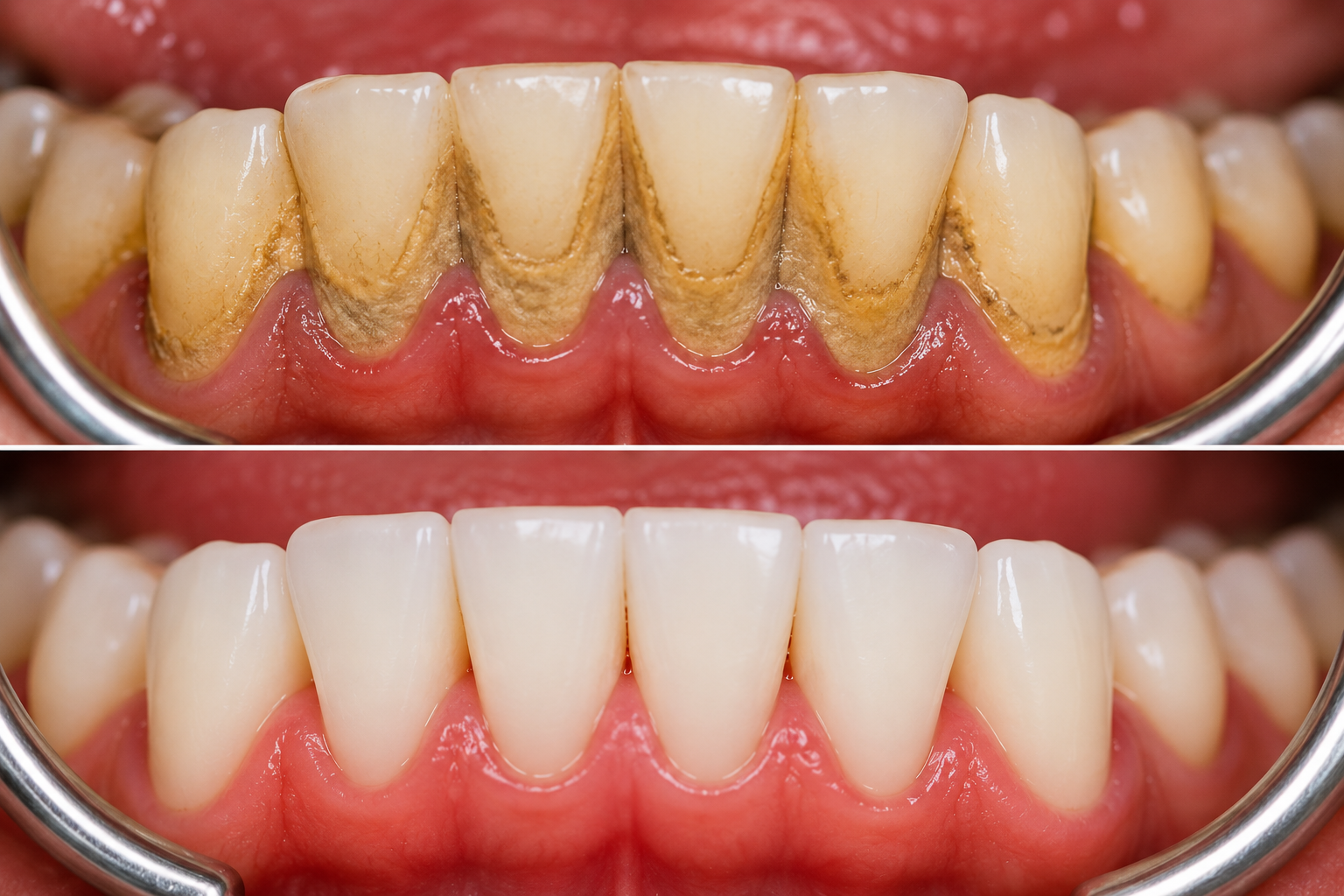
Tartar can feel rough. It may look yellow, brown, or chalky. It can also trap bacteria and stains.
Why tartar matters
Tartar is not just a cosmetic issue.
It can irritate your gums. It can make plaque easier to collect. It can contribute to bleeding, bad breath, gum inflammation, and deeper gum problems.
A hygienist uses professional tools to remove tartar safely. Brushing harder at home will not solve it and may irritate your gums.
Regular Cleanings Help Protect Your Gums
Your gums can develop problems quietly.
They may bleed before they hurt. They may look puffy before they feel sore. Your breath may change before you notice gum recession.
That is why regular profesional cleanings matter.
During a cleaning, your hygienist removes buildup around the gumline and between teeth. Your dental team can also check for early signs of gum inflammation.
Quiet gum warning signs include:
- Bleeding when brushing
- Bleeding when flossing
- Puffy or red gums
- Bad breath that keeps coming back
- A bad taste in your mouth
- Gum recession
- Sensitivity near the gumline
- Food trapping in the same area
A six-month visit gives your dental team a chance to catch these signs early.
Some gums need more frequent care
Six months is not enough for everyone.
If you have gum disease, heavy tartar buildup, deep gum pockets, diabetes, dry mouth, or a history of gum problems, your dentist or hygienist may recommend cleanings more often.
That is not a punishment. It is prevention based on your risk.
Cleanings Can Help Catch Cavities Earlier
Cavities often start before you feel pain.
A small cavity may not hurt at all. You may still chew normally. You may not see anything in the mirror.
During a checkup, your dentist can look for early decay, weak spots, dark areas, and changes around fillings. X-rays may also help find cavities between teeth when needed.
The Ontario Dental Association says regular checkups can catch cavities when they are small and easier to treat.
That matters because smaller problems are often simpler to manage.
Waiting can make treatment bigger
A small cavity may need a small filling or monitoring.
A larger cavity may need more involved care.
If decay gets deep enough, you may need:
- A larger filling
- A crown
- Root canal treatment
- Extraction in severe cases
- Tooth replacement options if the tooth cannot be saved
That is why waiting until pain starts can cost more later.
Cleanings Help Remove Surface Stains
Coffee, tea, red wine, soda, berries, sauces, and tobacco can all leave surface stains.
Some stains sit on plaque or tartar. When tartar holds stain, brushing at home will not remove it.
A professional cleaning can remove many surface stains and make your teeth feel smoother.
This is different from whitening.
A cleaning removes buildup and many outside stains. Whitening changes the shade of natural teeth. If your teeth look dull because of tartar or surface stain, a cleaning may make them look brighter before you even consider whitening.
Your Hygienist Can Spot What You Miss at Home
Most people miss the same spots again and again.
That does not mean you are careless. It means your mouth has hard-to-reach areas.
Your hygienist may notice:
- Plaque behind lower front teeth
- Tartar near the gumline
- Bleeding between certain teeth
- Food traps
- Rough filling edges
- Heavy stain in one area
- Signs of brushing too hard
- Areas where floss is not reaching
- Gum recession
- Buildup around dental work
That feedback helps you improve your home routine.
Sometimes a small change makes a big difference. You may need a softer brush, a different flossing tool, an interdental brush, or a better angle along the gumline.
Six-Month Cleanings Support Dental Work
Dental work still needs maintenance.
Crowns, bridges, implants, fillings, bonding, veneers, retainers, and dentures can all collect plaque around edges and hard-to-reach areas.
A cleaning helps protect the natural teeth and gums around dental work.
Your hygienist can clean around:
- Crown margins
- Filling edges
- Bridges
- Implant crowns
- Permanent retainers
- Bonding
- Veneers
- Denture clasps
This matters because a crown cannot decay, but the natural tooth under or around it can still develop problems. Gums around dental work can still become inflamed too.
What Happens at a Cleaning Visit
A cleaning visit usually includes more than polishing your teeth.
Depending on your needs, your dental team may:
- Review changes in your health or medications
- Ask about sensitivity, bleeding, pain, or dry mouth
- Check your gums
- Remove plaque and tartar
- Clean along the gumline
- Polish surface stains
- Floss between teeth
- Check areas that trap food
- Review brushing and flossing technique
- Recommend tools that fit your mouth
- Have the dentist check for cavities or other concerns
The visit is not only about today’s cleaning. It is also about planning better prevention until your next visit.
When You Should Not Wait Six Months
Six months is a common schedule, but you should not wait if something changes.
Book sooner if you notice:
- Tooth pain
- Pain when biting
- Sensitivity in one tooth
- Sensitivity that lingers
- Bleeding gums
- Puffy or red gums
- A bad taste
- Bad breath that keeps coming back
- A cracked or chipped tooth
- Food getting stuck in the same area
- A loose filling or crown
- Yellow or brown buildup near the gumline
Statistics Canada reported in 2024 that 26% of Canadians had oral pain or avoided eating certain foods because of problems with their mouth. You do not need to wait until a small symptom affects your daily life.
How Bronte Road Family Dental Can Help
Bronte Road Family Dental in Oakville can help you find the cleaning schedule that fits your mouth.
Your dental team can check your:
- Teeth
- Gums
- Plaque levels
- Tartar buildup
- Cavity risk
- Gum pocket measurements
- Existing dental work
- Areas that are hard to clean
- Signs of grinding or clenching
- Dry mouth symptoms
For many patients, six-month cleanings work well. Other patients benefit from more frequent care. Some may need a different schedule once their gums are stable.
The right timing depends on your mouth, not just the calendar.
The Bottom Line
Six-month cleanings are not just a calendar habit.
They help remove tartar your toothbrush cannot remove. They help protect your gums. They help catch small cavities earlier. They help control stains. They help your dental team spot changes before pain starts.
For many people, every six months is a good prevention rhythm. For others, a different schedule makes more sense.
Do not think of cleanings as “just a cleaning.”
Think of them as maintenance for your mouth.
Brush well. Floss daily. Drink water. Keep up with cleanings. Book sooner if something changes.
That is how small dental problems stay small.
External Sources:
Canadian Dental Association, Dental Care FAQs: https://www.cda-adc.ca/en/oral_health/faqs/dental_care_faqs.asp
Ontario Dental Association, Cavities and Tooth Decay: https://www.oda.ca/oral-health-basics/oral-conditions-diseases/cavities-tooth-decay/
Statistics Canada, Canadian Oral Health Survey Findings: https://www150.statcan.gc.ca/n1/daily-quotidien/241023/dq241023b-eng.htm
FAQ
Why do dentists often recommend cleanings every six months?
Six months is a common schedule because it helps many people stay ahead of tartar, gum inflammation, cavities, and buildup. Your dentist may recommend a different schedule based on your needs.
Does everyone need a cleaning every six months?
No. Some people need cleanings more often, especially if they have gum disease, heavy tartar buildup, dry mouth, or frequent cavities. Others may need visits less often.
Can brushing remove tartar?
No. Brushing removes soft plaque, but it cannot remove hardened tartar. A dental hygienist needs to remove tartar with professional tools.
What happens if I skip dental cleanings?
Plaque can harden into tartar, gums can become inflamed, stains can build, and small cavities may go unnoticed until they need more treatment.
Are dental cleanings only for making teeth look better?
No. Cleanings help protect gum health, remove tartar, reduce bacteria, check for early problems, and support long-term oral health.
When should I book sooner than six months?
Book sooner if you have tooth pain, bleeding gums, swelling, lingering sensitivity, a bad taste, bad breath, a cracked tooth, or a loose filling or crown.