What Your Next Cleaning Can Reveal About Your Daily Routine
Your dental cleaning can say a lot about your daily routine.
Not in a judging way.
In a useful way.
Your hygienist can often tell where you brush well, where plaque keeps coming back, where floss misses, and where your mouth needs extra support. Your teeth and gums leave clues. Tartar, bleeding gums, stains, dry mouth, food traps, and gumline buildup can all point to habits that happen between visits.
At Bronte Road Family Dental in Oakville, we often explain it this way. A cleaning is not only about removing buildup. It is also a chance to learn what your mouth has been dealing with every day.
Your Cleaning Can Reveal Where Plaque Builds
Plaque is a sticky film of bacteria that forms on your teeth every day.
When plaque is soft, brushing and flossing can remove much of it. But if plaque stays in the same areas too long, it can harden into tartar. The Canadian Dental Association says tartar cannot be removed by brushing and flossing once it hardens.
That is one reason your cleaning matters.
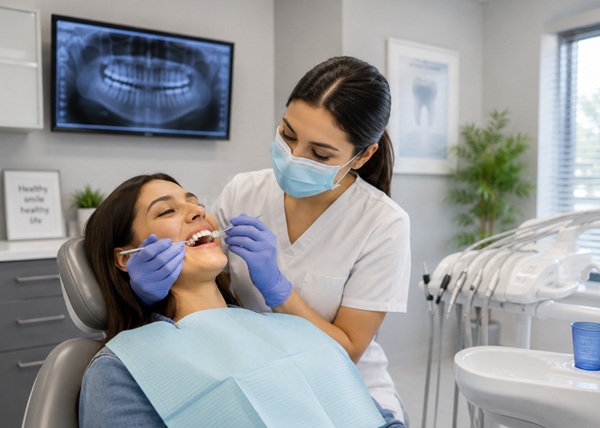
A professional teeth cleaning appointment can remove tartar and give you a clearer picture of where buildup is happening.
Your hygienist may notice plaque or tartar in areas such as:
- Behind the lower front teeth
- Along the gumline
- Between back teeth
- Around crowded teeth
- Near crowns or fillings
- Around retainers or bridges
- Behind the last molars
These areas can show where your toothbrush or floss is not reaching well.
Buildup Patterns Are Useful
Buildup is not random.
If tartar keeps showing up behind your lower front teeth, that area may need more careful brushing and flossing. If plaque collects near the gumline, your brushing angle may need work. If buildup appears around dental work, you may need a different cleaning tool.
Your hygienist can show you exactly where the pattern is.
That makes your home routine easier to improve.
Instead of hearing “brush better,” you get specific advice. You may learn that one side of your mouth needs more attention, or that a certain space between two teeth needs a different flossing tool.
Small changes can make a big difference.
Your Gums Can Reveal How Well the Gumline Is Being Cleaned
Healthy gums should not bleed often.
If your gums bleed during a cleaning, it may mean plaque or tartar has been irritating the tissue. You may not feel pain, but the gums can still be inflamed.
Gumline clues include:
- Bleeding
- Puffiness
- Redness
- Tender spots
- Deeper gum measurements
- Gum recession
- Bad breath or bad taste
The Ontario Dental Association recommends brushing twice a day with a soft toothbrush and cleaning where the gums meet the teeth. It also recommends cleaning between teeth daily because a toothbrush cannot reach those spaces well.
Bleeding does not always mean you have a serious problem. But it does mean your gums are giving you information.
Bleeding Does Not Mean You Failed
Bleeding gums do not mean you are a bad brusher.
They mean something needs attention.
You may be missing the gumline. You may be skipping floss. You may have tartar buildup. You may be brushing too hard in one area and not enough in another.
The point of the cleaning is to find the pattern and fix the routine.
Your hygienist may suggest a softer brush, a different brushing angle, floss picks, interdental brushes, or a shorter interval between cleanings.
The goal is not to make you feel guilty. The goal is to help you clean better at home.
Stains Can Reveal Food and Drink Habits
Surface stains can tell a story too.
Coffee, tea, red wine, soda, berries, curry, tomato sauce, and tobacco can all leave stains over time. Stains often collect faster when plaque or tartar is present.
Your hygienist may notice stains:
- Near the gumline
- Between teeth
- Around older fillings
- Behind the front teeth
- On rough enamel areas
- Around tartar buildup
A professional cleaning can remove many surface stains. But if stains keep coming back quickly, your daily habits may need small changes.
What Helps Reduce Staining
You do not need to give up everything that stains.
Try this:
- Drink water after coffee, tea, wine, or soda
- Avoid sipping dark drinks for hours
- Brush twice a day with fluoride toothpaste
- Floss once a day
- Keep up with dental cleanings
- Ask before whitening if you have crowns, veneers, bonding, or sensitivity
Cleaning removes many surface stains. It does not replace whitening when the colour is deeper inside the tooth.
If you are bothered by tooth colour after your cleaning, you can ask about teeth whitening options. Your dentist can also explain when whitening is helpful and when another cosmetic treatment may be a better fit.
For example, whitening does not change the colour of crowns, veneers, or bonding. That is why it is important to ask first.
Food Traps Can Reveal Bite or Filling Issues
Food getting stuck once in a while is normal.
Food getting stuck in the same spot every day is different.
During a cleaning, your hygienist may notice plaque, bleeding, or irritation around a repeated food trap. Your dentist may then check whether there is a reason food keeps collecting there.
A food trap may come from:
- A space between teeth
- Gum recession
- A rough filling edge
- A worn filling
- A cavity
- Crowded teeth
- A crown margin
- A change in your bite
Do not just keep digging food out harder.
If the same area traps food again and again, bring it up at your visit. If decay or an older filling is part of the issue, your dentist may recommend dental fillings to repair and protect the tooth.
If the problem is related to an older crown or a weakened tooth, your dentist may also discuss dental crowns as an option.
Dry Mouth Signs Can Show Up During Cleaning
Dry mouth can affect your teeth and gums more than people realize.
Saliva helps rinse away food particles, balance acids, and control bacteria. When your mouth is dry, plaque can build faster and breath can feel stale.
Your hygienist may notice signs such as:
- Sticky plaque
- More buildup near the gumline
- Dry or irritated tissues
- Bad breath
- Higher cavity risk
- Cracking at the corners of the mouth
- Complaints of a coated feeling
Dry mouth can happen because of medications, dehydration, mouth breathing, stress, coffee, alcohol, vaping, or sleeping with your mouth open.
If your mouth often feels dry, mention it. Your dental team may recommend hydration habits, fluoride support, dry mouth products, or changes to your routine.
Your Cleaning Can Reveal If You Brush Too Hard
More pressure does not mean cleaner teeth.
Sometimes a cleaning reveals signs that you may be brushing too hard.
These signs can include:
- Gum recession
- Toothbrush abrasion near the gumline
- Sensitive root areas
- Tender gums
- Worn enamel near the necks of teeth
Brushing too hard can irritate gums and wear tooth structure over time.
A better approach is simple.
Use a soft toothbrush. Hold it gently. Angle it toward the gumline. Use small circles. Let the bristles do the work.
If your brush bristles flatten quickly, you may be pressing too hard.
Your hygienist can show you how much pressure to use and where to focus your brushing.
Your Cleaning Can Reveal If Flossing Is Missing Certain Areas
Many people floss, but not every area gets cleaned well.
Your hygienist may notice plaque or bleeding between certain teeth. That does not always mean you are not flossing. It may mean your technique or tool is not right for that space.
You may need:
- String floss
- Floss picks
- Waxed floss
- Interdental brushes
- Soft picks
- A water flosser
- Floss threaders for bridges or retainers
The best tool is the one that cleans the area well and fits your routine.
If your hygienist recommends a tool, ask them to show you how to use it. A 30-second demonstration can be more useful than guessing at home.
Floss Catching Matters
Tell your dentist or hygienist if floss catches, shreds, or gets stuck in the same spot.
That can point to:
- A rough filling edge
- Tartar between teeth
- Tight contacts
- A small chip
- Decay between teeth
- Older dental work that needs attention
Your cleaning can help reveal whether the issue is technique, buildup, or a tooth that needs repair.
If a tooth is chipped, worn, or uneven, treatment may be simple. Depending on the case, your dentist may discuss dental bonding or another repair option.
Your Dental Work Leaves Clues Too
Crowns, bridges, fillings, bonding, implants, veneers, retainers, and dentures all need maintenance.
Your hygienist may see plaque building around the edges of dental work. Your dentist may check whether the fit, bite, or margins need attention.
Daily routine matters even more around dental work because small edges and tight spaces can trap plaque.
Your dental team may check for:
- Plaque around crowns
- Stain around bonding
- Food traps near bridges
- Tartar around retainers
- Inflammation around implants
- Rough filling edges
- Areas where floss cannot pass easily
Dental work does not remove the need for cleaning.
It creates areas that need the right cleaning method.
If you have missing teeth, removable teeth, or older appliances, your dentist may also review how to clean around dentures or other replacement options.
What Your Hygienist May Suggest After a Cleaning
After your cleaning, your hygienist may recommend small changes.
These are not meant to overwhelm you. They are meant to target the exact areas your mouth is showing them.
You may hear suggestions such as:
- Brush longer along the gumline
- Use a softer toothbrush
- Switch to an electric toothbrush
- Floss before bed
- Try interdental brushes
- Use a fluoride toothpaste
- Drink more water
- Rinse after coffee or soda
- Come in more often for cleanings
- Ask the dentist to check a food trap
- Wear a nightguard if grinding is showing
The best advice is specific.
“Brush better” is vague.
“Spend more time behind the lower front teeth and along the upper molars” is useful.
That is what makes a cleaning valuable. You leave with information you can use.
When Your Daily Routine Needs a Change
Your routine may need an update if your cleaning keeps showing the same issues.
Watch for:
- Tartar in the same spots every visit
- Bleeding gums
- Stale breath
- Food stuck in one area
- Floss catching
- Sensitivity near the gumline
- Dry mouth
- New stains
- Cavities between teeth
- Plaque around dental work
Statistics Canada reported in 2025 that 57% of children aged 6 to 11 had at least one affected baby or adult tooth in 2022 to 2024. Adults can also have hidden plaque, tartar, and cavity risks that do not hurt at first.
The goal is not perfection.
The goal is to keep improving the routine before small problems become bigger.
If you are booking for a child, a cleaning can also help parents understand brushing habits, cavity risk, and areas that need extra support. You can ask about children’s dentistry in Oakville if your child is due for a visit.
How Bronte Road Family Dental Can Help
Bronte Road Family Dental in Oakville can help you understand what your cleaning reveals about your daily routine.
Your dental team can check your:
- Plaque patterns
- Tartar buildup
- Gum health
- Brushing technique
- Flossing habits
- Food traps
- Staining
- Dry mouth signs
- Dental work
- Areas that need extra home care
A professional cleaning removes tartar and buildup that brushing cannot remove at home. It also gives you clear feedback on what to adjust between visits.
Your dentist may also use advanced dental technology to assess your teeth, gums, and existing dental work more clearly.
Sometimes one small change makes the biggest difference.
A better brushing angle.
A different flossing tool.
More water after coffee.
A shorter gap between cleanings.
That is what a good cleaning can teach you.
New to the Office?
If you are new to Bronte Road Family Dental, your first visit is a good time to talk about your dental history, daily routine, concerns, and goals.
You can also ask about fees, insurance, and coverage before booking. The office provides information about dental treatment costs and dental insurance and billing so you can better understand what to expect.
If you are ready to schedule your next visit, you can book an appointment with the team.
The Bottom Line
Your next cleaning can reveal more than plaque.
It can show where your daily routine is working and where it needs help.
Your hygienist can see buildup patterns, gumline irritation, stains, food traps, dry mouth signs, brushing pressure, and areas that your floss may be missing.
Use that information.
Brush gently. Clean between your teeth daily. Drink water. Ask which areas need more attention. Keep up with your cleaning schedule.
Your mouth leaves clues.
Your cleaning helps you read them.
External Sources
Canadian Dental Association, Gum Disease: https://www.cda-adc.ca/en/oral_health/complications/diseases/gum_diseases.asp
Ontario Dental Association, Gum Disease: https://www.oda.ca/oral-health-basics/oral-conditions-diseases/gum-disease/
Statistics Canada, Direct Measures of Oral Health: https://www150.statcan.gc.ca/n1/daily-quotidien/251201/dq251201a-eng.htm
FAQ
What can a dental cleaning reveal?
A dental cleaning can reveal plaque patterns, tartar buildup, gum inflammation, food traps, stains, dry mouth signs, brushing pressure, and areas that are hard to clean at home.
Can a hygienist tell if I floss?
A hygienist can often see signs that certain areas are not being cleaned between teeth. That may show up as plaque, tartar, bleeding, or gum irritation between teeth.
Why do I get tartar in the same spots?
Tartar often builds in areas that are hard to clean or where saliva minerals collect. Common spots include behind the lower front teeth, between teeth, and along the gumline.
Does bleeding during a cleaning mean gum disease?
Not always. Bleeding can come from plaque buildup, tartar, or gum irritation. But bleeding that keeps happening should be checked and managed.
Can a cleaning remove stains?
A professional cleaning can remove many surface stains, especially stains attached to plaque or tartar. Deeper tooth colour may need whitening or another cosmetic option.
What should I ask my hygienist at my next cleaning?
Ask which areas collect the most plaque, whether your gums are bleeding, what tool works best between your teeth, and whether your cleaning schedule fits your oral health needs.