Are You Brushing Your Teeth Correctly? Most People Aren’t
Brushing your teeth is something you do every day, but are you doing it correctly?
Many people brush twice a day and still develop cavities, gum disease, or tooth sensitivity. Often, it isn’t because they aren’t brushing enough—it’s because they’re using the wrong technique, brushing for too little time, or missing important areas.
At Bronte Road Family Dental in Oakville, one of the most common things we teach patients isn’t a complicated dental procedure. It’s simply how to brush their teeth more effectively.
A few small changes to your routine can make a big difference in protecting your smile.
Why Brushing Is So Important
Every day, a sticky layer of bacteria called plaque forms on your teeth.
If plaque isn’t removed regularly, it can:
- Cause cavities
- Irritate your gums
- Lead to gum disease
- Contribute to bad breath
- Harden into tartar, which can only be removed during a professional dental cleaning
Brushing removes plaque before it has a chance to cause damage.
Combined with flossing and regular dental checkups, brushing is one of the best ways to maintain healthy teeth and gums.
How Often Should You Brush?
Most dentists recommend brushing:
- Twice a day
- For at least two minutes each time
- Using fluoride toothpaste
Brushing before bed is especially important because it removes plaque, bacteria, and food debris that build up throughout the day.
The Right Way to Brush Your Teeth
A good brushing technique is gentle and thorough.
Follow these simple steps:
1. Use a Soft-Bristled Toothbrush
Soft bristles clean your teeth effectively while being gentle on your enamel and gums.
Hard-bristled toothbrushes are usually unnecessary and may contribute to enamel wear or gum recession if used aggressively.
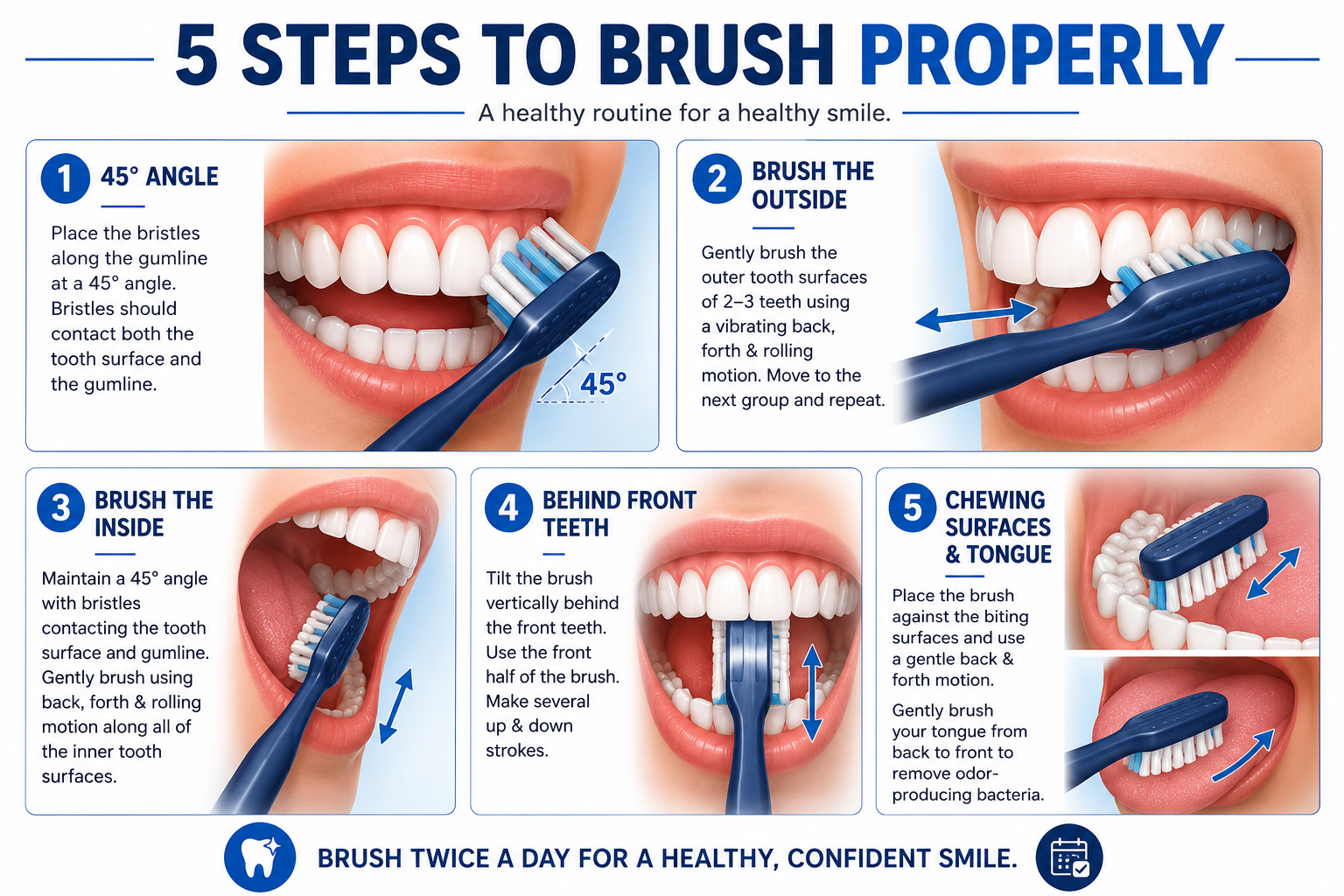
2. Hold the Brush at a 45-Degree Angle
Aim the bristles toward where the teeth meet the gums.
This helps remove plaque along the gumline, where it tends to accumulate.
3. Use Gentle Circular Motions
Avoid scrubbing back and forth.
Instead, make small circular movements while allowing the bristles to clean each tooth.
Gentle brushing is usually more effective and causes less damage.
4. Brush Every Surface
Don’t forget to clean:
- The outside of your teeth
- The inside surfaces
- The chewing surfaces
- Behind your back teeth
- Along the gumline
Many people consistently miss the inside surfaces of the lower front teeth.
5. Brush Your Tongue
Your tongue can trap bacteria that contribute to bad breath.
A few gentle strokes with your toothbrush or a tongue scraper can help keep your mouth feeling fresh.
Common Brushing Mistakes
Even people who brush every day can make mistakes.
Here are some of the most common:
Brushing Too Hard
More pressure does not mean cleaner teeth.
Brushing aggressively can:
- Wear away enamel
- Cause gum recession
- Increase tooth sensitivity
Let the bristles do the work.
Brushing Too Quickly
Two minutes may feel longer than you think.
Many people brush for less than one minute without realizing it.
Consider using:
- A timer
- An electric toothbrush with a built-in timer
- A favourite two-minute song
Using the Wrong Toothbrush
Replace your toothbrush every three to four months, or sooner if the bristles become bent or worn.
A worn toothbrush does not clean as effectively.
Forgetting to Floss
Your toothbrush cleans only about 60% of your tooth surfaces.
The spaces between your teeth need to be cleaned daily with floss, floss picks, interdental brushes, or another tool recommended by your dentist.
Manual vs. Electric Toothbrushes
Both manual and electric toothbrushes can clean your teeth well when used properly.
However, electric toothbrushes may make it easier to remove plaque consistently, especially for people who:
- Have braces
- Have arthritis or limited hand movement
- Tend to brush too hard
- Have difficulty reaching certain areas
The best toothbrush is the one you use correctly every day.
Which Toothpaste Should You Use?
Most people should choose a fluoride toothpaste.
Depending on your needs, your dentist may recommend:
- Toothpaste for sensitive teeth
- Tartar-control toothpaste
- Prescription-strength fluoride toothpaste
- Whitening toothpaste for removing surface stains
Remember that whitening toothpaste does not actually bleach teeth. It mainly removes surface stains through mild abrasives.
When Should You Replace Your Toothbrush?
Replace your toothbrush when:
- The bristles become worn.
- It has been about three to four months.
- You’ve recently recovered from certain illnesses if advised by your healthcare provider.
- The toothbrush becomes damaged.
Fresh bristles clean more effectively.
How Bronte Road Family Dental Can Help
At Bronte Road Family Dental, we believe prevention is the best form of dental care.
During your dental examination and cleaning, we can evaluate your brushing technique and recommend personalized advice based on your oral health. Whether you need help managing sensitive teeth, improving your brushing habits, or choosing the right oral care products, our team is happy to help.
Small improvements today can help prevent cavities, gum disease, and unnecessary dental treatment in the future.
Frequently Asked Questions
Is brushing three times a day better than twice?
Not necessarily. Brushing twice a day thoroughly with good technique is usually sufficient for most people. Brushing too often or too aggressively may contribute to enamel wear and gum recession.
Should I brush before or after breakfast?
If you eat acidic foods or drink orange juice, it’s generally best to wait about 30 minutes before brushing. Many people choose to brush before breakfast to remove overnight plaque and protect their teeth with fluoride.
How long should I brush my teeth?
Aim for at least two minutes each time you brush.
Is an electric toothbrush better?
Electric toothbrushes can remove plaque very effectively and may be easier to use for many people, but a manual toothbrush can also work well when used properly.
Why do my gums bleed when I brush?
Bleeding gums are often a sign of gum inflammation caused by plaque buildup. If bleeding continues despite regular brushing and flossing, schedule a dental examination.
A Better Brushing Routine Starts Today
Brushing your teeth is one of the simplest things you can do to protect your oral health, but technique matters just as much as frequency.
Using a soft toothbrush, brushing gently for two minutes, cleaning every surface of your teeth, and flossing daily can help reduce your risk of cavities, gum disease, and tooth sensitivity.
If you’re unsure whether you’re brushing correctly, the team at Bronte Road Family Dental in Oakville is always happy to provide personalized guidance to help you keep your smile healthy for years to come.
References
- Canadian Dental Association – Oral Health Resources
- American Dental Association – MouthHealthy: Brushing Your Teeth
- Ontario Dental Association – Patient Oral Health Information