
What Dental X-Rays Can Catch Before You Feel Anything
You can have a dental problem and feel completely fine.
No pain.
No swelling.
No obvious hole.
No trouble chewing.
That is why dental X-rays matter.
A visual exam is important, but your dentist cannot see everything by looking in your mouth. Some problems start between teeth, under old fillings, near tooth roots, or in the bone. These areas may not hurt until the issue has grown.
At Bronte Road Family Dental in Oakville, we often explain it this way. Dental X-rays help your dentist see what your eyes and symptoms cannot show yet.
Why Dental X-Rays Are Used
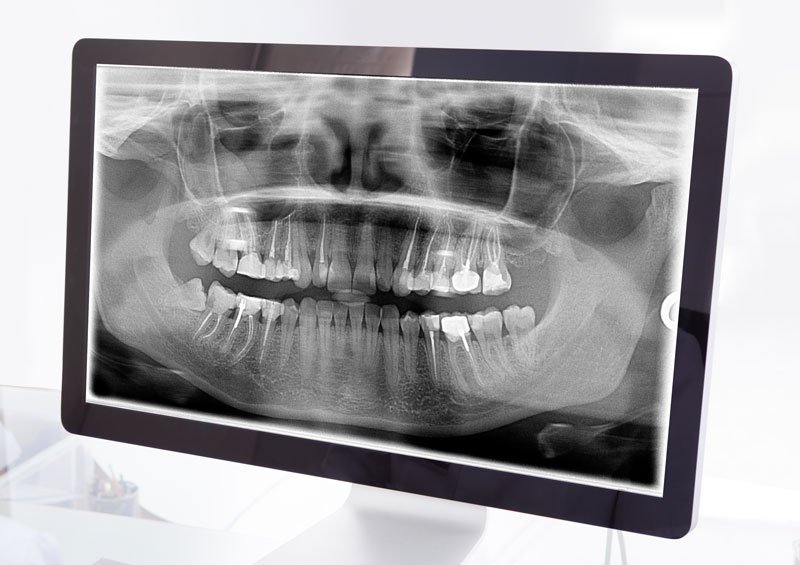
Dental X-rays help your dentist look below the surface.
They can show areas that are hidden during a regular exam. Your dentist may recommend them based on your age, symptoms, dental history, cavity risk, gum health, or time since your last images.
X-rays can help check for:
- Cavities between teeth
- Decay under or around old fillings
- Bone loss around teeth
- Infections near tooth roots
- Impacted wisdom teeth
- Problems around crowns or bridges
- Cracked or damaged teeth in some cases
- Changes in children’s developing teeth
- Areas that need monitoring over time
They are not taken just to fill time. They give your dentist more information when a visual exam is not enough.
Cavities Between Teeth Can Hide
Cavities between teeth are hard to see.
Your toothbrush cannot fully clean those tight spaces. Your eyes cannot see them well in the mirror. Even your dentist may not be able to see early decay between teeth without an X-ray.
This is one of the most common reasons X-rays are helpful.
A small cavity between teeth may not hurt. You may only notice symptoms later, when it gets deeper.
Possible signs include:
- Sweet sensitivity
- Cold sensitivity
- Food trapping between teeth
- Floss shredding in the same spot
- A bad taste from one area
- Pain that starts later
But often, there are no signs at all.
That is the point of checking early.
Decay Around Old Fillings Can Be Quiet
Fillings do not last forever.
Over time, a filling can chip, wear down, crack, or develop a small gap at the edge. Bacteria can enter that space and decay can start under or beside the filling.
You may not feel it right away.
An X-ray can help your dentist check areas that are hard to see from the outside.
Watch for possible clues, such as:
- A rough filling edge
- Food catching near a filling
- Floss catching or tearing
- Sensitivity to cold or sweets
- A dark line around the filling
- A filling that feels different when you bite
If an old filling feels off, do not wait until it breaks or hurts. It may be easier to repair when the problem is still small.
X-Rays Can Show Bone Changes
Your teeth sit in bone.
A regular exam can show your gums, but X-rays can help your dentist assess bone levels around teeth.
This matters because gum disease can affect the supporting bone over time. You may not feel pain at first. Your gums may bleed or look puffy, but the deeper support changes may not be obvious without imaging.
X-rays can help your dentist look for:
- Bone loss around teeth
- Changes linked to gum disease
- Areas of infection
- Problems around tooth roots
- Changes near dental implants
This information helps guide your care. It may affect how often you need cleanings, whether deeper gum treatment is needed, or whether an area needs monitoring.
Infections Can Start Before Severe Pain
A tooth infection does not always start with dramatic pain.
Sometimes a tooth has an old injury, deep decay, or a large filling. The nerve inside the tooth can become irritated or infected over time.
An X-ray may show changes near the root tip or surrounding bone.
You may notice:
- A dull ache
- Sensitivity that lingers
- Pain when biting
- Swelling near the gum
- A pimple-like bump on the gum
- A bad taste
- A tooth that looks darker
But sometimes the first clue comes from the X-ray, not the symptom.
That is why regular exams matter, especially if you have older dental work or a history of tooth trauma.
Wisdom Teeth and Developing Teeth Need Monitoring
Dental X-rays can also help check teeth that are not fully visible.
This often matters for teenagers and young adults with wisdom teeth. It can also matter for children whose adult teeth are still developing.
X-rays can help show:
- Whether wisdom teeth are impacted
- Whether teeth are coming in at an angle
- Whether a tooth is blocked
- Whether baby teeth are affecting adult teeth
- Whether there are missing or extra teeth
- Whether roots are developing normally
You do not always feel problems with impacted teeth right away. Imaging helps your dentist decide whether to watch, refer, or treat.
X-Rays Help Check Dental Work
Dental work needs monitoring.
Crowns, bridges, fillings, implants, bonding, and root canal treated teeth can all develop issues around them. You may not see the problem yourself.
X-rays can help check:
- Decay around crown edges
- Decay under fillings
- Bone levels around implants
- Root canal treated teeth
- Fit and health around bridges
- Areas where food keeps getting trapped
- Changes near old dental work
A crown cannot decay, but the natural tooth under or around it still can. That is why dental work does not remove the need for regular checkups.
X-Rays Are Not Always Needed at Every Visit
Not every visit requires X-rays.
Your dentist should recommend them based on your needs, not just the calendar.
You may need X-rays more often if you have:
- Frequent cavities
- Many fillings or crowns
- Gum disease
- Dry mouth
- New pain or sensitivity
- A history of dental infections
- Wisdom teeth concerns
- Dental implants
- Food traps
- A high cavity risk
You may need them less often if your mouth is stable and your risk is low.
If you are not sure why an X-ray is being taken, ask. A good dental team should explain the reason clearly.
What About Radiation?
Many patients wonder about radiation.
That is a fair question.
Dental X-rays use a low amount of radiation. Dentists also use safety steps to keep exposure as low as reasonably possible. The decision to take an X-ray should come from the benefit of seeing something important, not from routine alone.
If you are pregnant, think you may be pregnant, or have concerns about radiation, tell your dental team before X-rays are taken.
The goal is simple.
Use X-rays when they help answer a dental question or catch a problem early.
Why Early Detection Can Save You Trouble
A small problem is usually easier to treat than a large one.
A small cavity may need a small filling or monitoring. A deeper cavity may need a bigger filling, crown, root canal, or extraction in severe cases.
The same idea applies to gum disease, infections, cracks, and problems around old dental work.
Dental X-rays help your dentist catch hidden issues before they become painful.
This can help reduce:
- Emergency visits
- Toothaches
- Larger fillings
- More complex treatment
- Unexpected costs
- Time away from work or school
- Stress
Waiting until you feel pain can mean the problem has already grown.
When You Should Book a Dental Visit
Do not wait for severe pain.
Book a dental visit if you notice:
- Sensitivity in one tooth
- Pain when biting
- Sweet sensitivity
- Cold sensitivity that keeps returning
- Food stuck in the same area
- Floss catching or shredding
- A dark spot on a tooth
- A rough filling
- A loose crown or filling
- Swelling near a tooth or gum
- A bad taste that does not go away
- Bad breath that keeps coming back
Statistics Canada reported in 2024 that 26% of Canadians had oral pain or avoided eating certain foods because of mouth problems. Small dental issues can affect daily life when they are ignored.
How Bronte Road Family Dental Can Help
Bronte Road Family Dental in Oakville can help you understand when dental X-rays make sense for your mouth.
Your dental team can check your:
- Teeth
- Gums
- Fillings
- Crowns
- Bridges
- Implants
- Bite
- Bone levels
- Areas between teeth
- Wisdom teeth
- Areas that are hard to see visually
If X-rays are recommended, your dentist can explain what they are looking for and how the images help guide your care.
The goal is not to take unnecessary images.
The goal is to catch hidden problems early and make better decisions.
The Bottom Line
Dental X-rays can catch problems before you feel anything.
They can help find cavities between teeth, decay around old fillings, bone changes, infections, wisdom tooth problems, and issues around dental work.
You may feel fine and still have something starting quietly.
That does not mean you need X-rays at every visit. It means X-rays are useful when your dentist needs more information than a visual exam can provide.
Ask questions. Understand why the image is needed. Keep up with checkups.
Finding small problems early is usually better than waiting for pain.
External Sources
Canadian Dental Association, Dental Care FAQs: https://www.cda-adc.ca/en/oral_health/faqs/dental_care_faqs.asp
Canadian Dental Association, Cavities: https://www.cda-adc.ca/en/oral_health/talk/complications/diseases/cavities.asp
Ontario Dental Association, Cavities and Tooth Decay: https://www.oda.ca/oral-health-basics/oral-conditions-diseases/cavities-tooth-decay/
Statistics Canada, Canadian Oral Health Survey Findings: https://www150.statcan.gc.ca/n1/daily-quotidien/241023/dq241023b-eng.htm
FAQ
What can dental X-rays show that a dentist cannot see?
Dental X-rays can show cavities between teeth, decay under fillings, bone changes, infections near roots, wisdom teeth, and some problems around crowns, bridges, or implants.
Do I need dental X-rays at every checkup?
Not always. X-rays should be based on your oral health needs, symptoms, cavity risk, gum health, dental history, and time since your last images.
Can X-rays find cavities before they hurt?
Yes. X-rays can help find cavities between teeth or under old dental work before you feel pain.
Are dental X-rays safe?
Dental X-rays use a low amount of radiation. Dentists use safety steps and should recommend X-rays only when the image is useful for your care.
Why would I need an X-ray if nothing hurts?
Some dental problems do not hurt at first. X-rays can help catch hidden issues before they become painful or harder to treat.
When should I ask my dentist about X-rays?
Ask if you have sensitivity, pain when biting, food trapping, old fillings, wisdom tooth concerns, gum problems, or if you are unsure why an X-ray is being recommended.