Electric Toothbrush vs. Manual Toothbrush: Which Is Better?
Walk into any pharmacy and you’ll find an entire aisle filled with toothbrushes.
Manual. Electric. Soft. Ultra-soft. Oscillating. Sonic.
With so many choices, it’s natural to wonder:
Which toothbrush actually does the best job?
At Bronte Road Family Dental in Oakville, this is one of the questions we hear most often. The good news is that both manual and electric toothbrushes can keep your teeth healthy when used correctly—but each has its own advantages.
Does the Type of Toothbrush Really Matter?
Yes—but perhaps not as much as you think.
The most important factors are:
- Brushing twice a day
- Brushing for two minutes
- Using proper technique
- Cleaning every surface of every tooth
If these habits are consistent, both manual and electric toothbrushes can be effective.
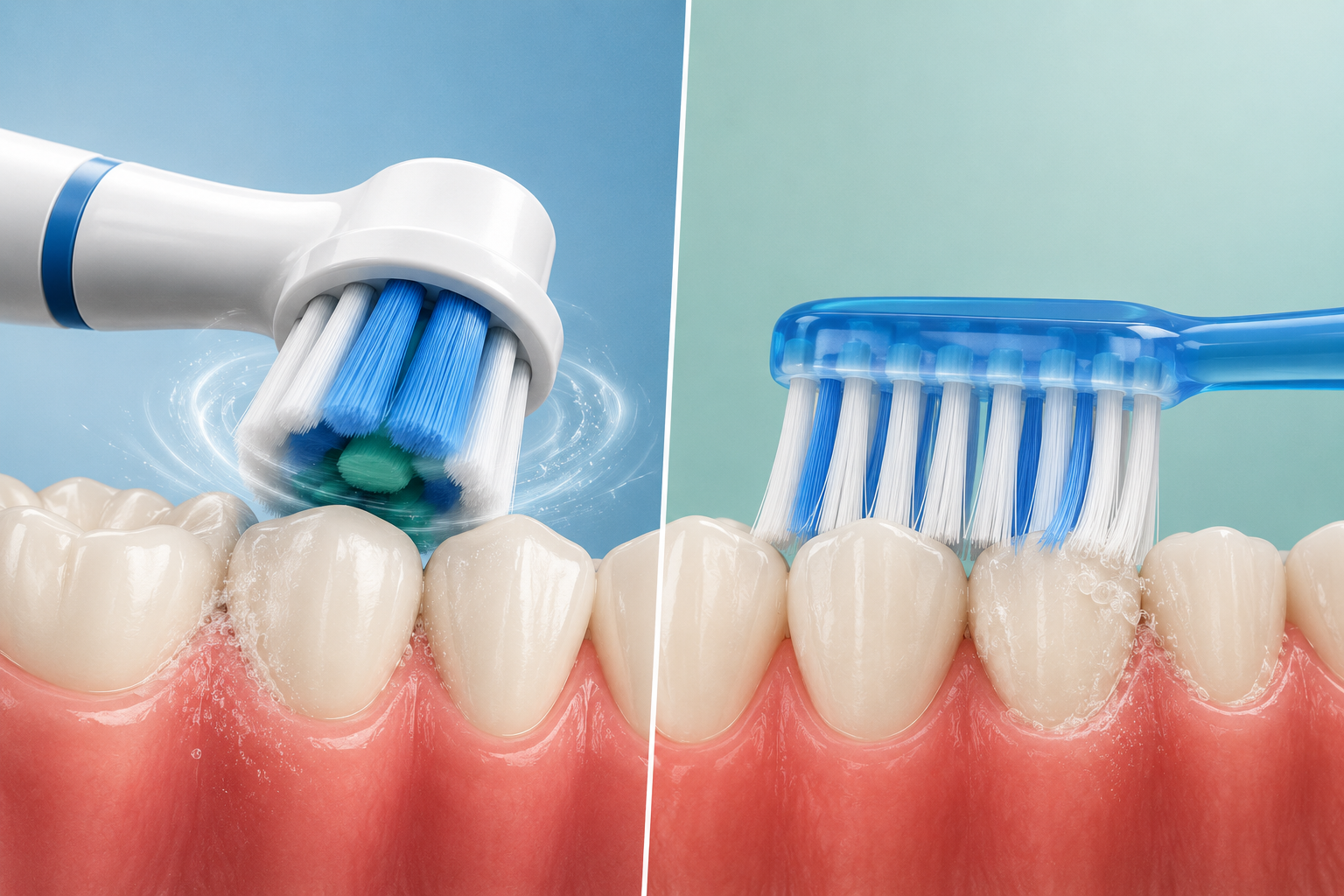
Manual Toothbrushes
Manual toothbrushes have been helping people clean their teeth for generations.
Advantages
- Affordable
- Easy to travel with
- No batteries or charging required
- Available in many sizes and styles
- Easy to replace every three months
For many people, a soft-bristled manual toothbrush works extremely well when used correctly.
Disadvantages
Manual brushing relies entirely on your technique.
Many people:
- Brush too hard.
- Brush for less than two minutes.
- Miss difficult-to-reach areas.
- Forget to replace their toothbrush regularly.
Without good technique, plaque removal may be less effective.
Electric Toothbrushes
Electric toothbrushes use rapid oscillating or sonic movements to help remove plaque.
Many modern models also include built-in timers and pressure sensors.
Advantages
Research suggests electric toothbrushes may:
- Remove slightly more plaque.
- Reduce gingivitis more effectively.
- Make brushing easier for many people.
- Encourage brushing for the full two minutes.
- Help people brush more gently with pressure sensors.
They may be especially helpful for:
- Children
- Older adults
- People wearing braces
- Individuals with arthritis or limited hand mobility
- Anyone who struggles with brushing technique
Disadvantages
Electric toothbrushes also have a few drawbacks.
They are:
- More expensive
- Rechargeable or battery-powered
- Bulkier for travel
- More expensive to replace if damaged
Replacement brush heads also cost more than manual toothbrushes.
Which Cleans Better?
Overall, research has found that electric toothbrushes generally remove slightly more plaque and may reduce gum inflammation more effectively than manual toothbrushes.
However, the difference is often much smaller than people expect.
A person who brushes carefully with a manual toothbrush for two minutes twice a day may achieve excellent oral hygiene.
In many cases, technique matters more than the toothbrush itself.
Which Toothbrush Is Best for Children?
Many children enjoy electric toothbrushes because they make brushing more fun.
Features such as:
- Built-in timers
- Music
- Lights
- Smartphone apps
- Smaller brush heads
can help encourage consistent brushing habits.
Regardless of the toothbrush chosen, parents should supervise brushing until children have developed the coordination to brush effectively.
What Kind of Bristles Should You Choose?
Most dentists recommend a soft-bristled toothbrush.
Soft bristles effectively remove plaque while reducing the risk of:
- Gum recession
- Enamel wear
- Tooth sensitivity
Hard bristles are rarely necessary and may damage teeth and gums if excessive pressure is used.
How Often Should You Replace Your Toothbrush?
Whether you use a manual or electric toothbrush, replace the brush head approximately every three months, or sooner if the bristles become frayed.
A worn toothbrush doesn’t clean as effectively.
How Bronte Road Family Dental Can Help
At Bronte Road Family Dental, we don’t believe there’s one perfect toothbrush for everyone.
During your dental examination, we can recommend the type of toothbrush that’s most appropriate for your oral health, brushing habits, and lifestyle.
Sometimes a simple change in brushing technique is even more beneficial than changing toothbrushes.
Frequently Asked Questions
Are electric toothbrushes worth the extra cost?
For many people, yes. They can make brushing easier and may improve plaque removal, especially for those who struggle with brushing technique.
Can a manual toothbrush clean just as well?
Yes. When used correctly with proper technique for two minutes twice daily, a manual toothbrush can provide excellent cleaning.
Which toothbrush is best for braces?
Electric toothbrushes often make cleaning around brackets and wires easier, although both types can be effective.
Do electric toothbrushes damage teeth?
No. When used properly, electric toothbrushes are safe. Many newer models include pressure sensors to help prevent brushing too hard.
Should I use a hard-bristled toothbrush?
No. Most dentists recommend soft-bristled toothbrushes because they clean effectively while being gentler on enamel and gums.
The Best Toothbrush Is the One You’ll Use Properly
Both manual and electric toothbrushes can help you maintain a healthy smile.
If you enjoy the convenience and features of an electric toothbrush, it may help you brush more effectively. If you prefer a manual toothbrush and use good technique consistently, it can work just as well.
The most important habit isn’t the toothbrush itself—it’s brushing thoroughly twice every day and visiting your dentist regularly.
If you’re unsure which toothbrush is right for you, the team at Bronte Road Family Dental in Oakville is happy to recommend the best option based on your individual needs.
References
- Canadian Dental Association – Toothbrushing Recommendations
- American Dental Association – MouthHealthy: Toothbrushes
- Cochrane Review – Powered versus Manual Toothbrushing for Oral Health